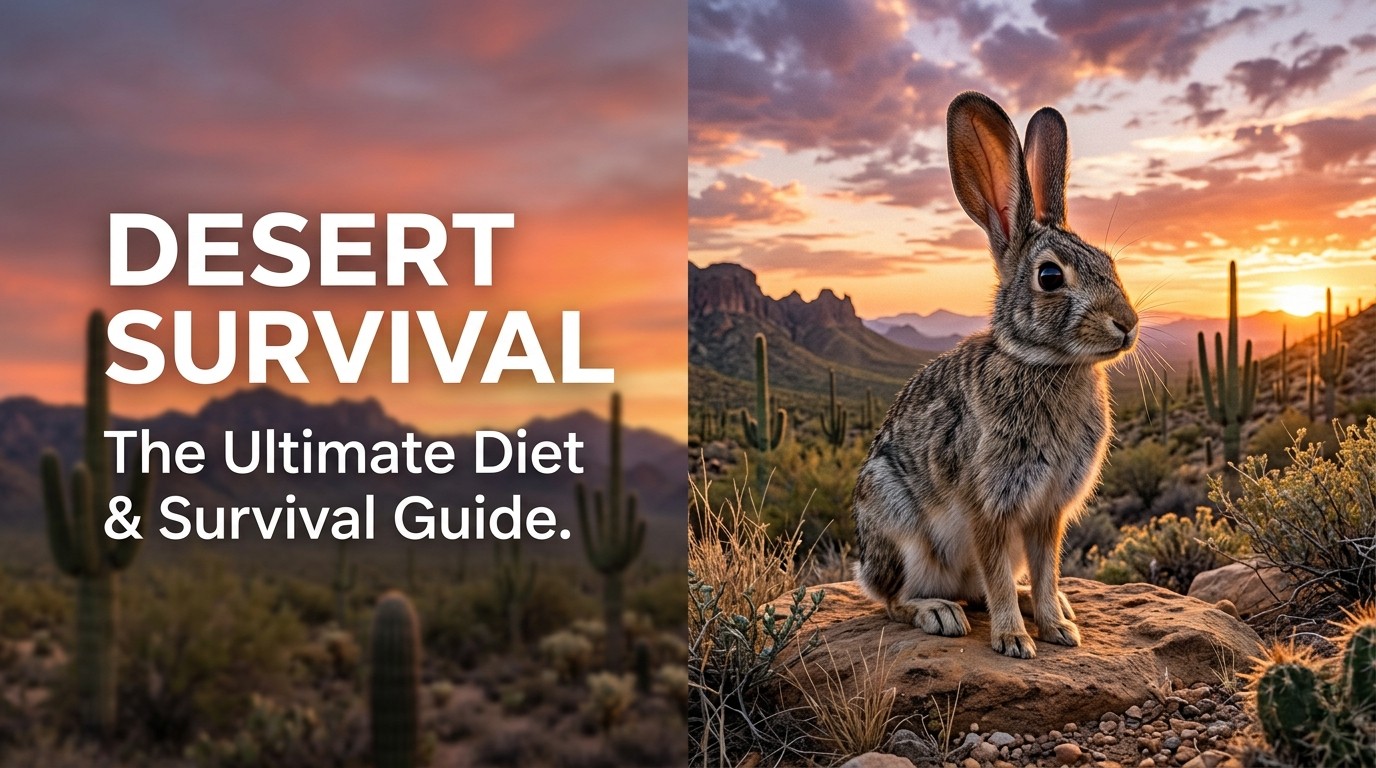
Here is the quick way to know What Do Desert Cottontail Rabbits Eat
Introduction
The Desert Cottontail (Sylvilagus audubonii) is one of the most common wild rabbits across the American Southwest. You will find it across Texas, Arizona, Nevada, California, and New Mexico. It is small, quick, and remarkably good at surviving in some of the harshest landscapes in the USA. Its diet is a big reason why.
Quick Answer:Desert Cottontail Rabbits eat grasses, forbs, desert shrubs, cacti, bark, and leafy plants. In the wild, they rely on Blue Grama grass, Mesquite, Sagebrush, and Prickly Pear. They adapt their diet with every season to survive heat, drought, and winter cold.
The Core Diet: What Do Desert Cottontails Eat in the Wild?

Desert Cottontails are strict herbivores. They eat plant matter only, and they are skilled at finding nutrition in places most animals ignore. Their diet is built around three main food groups: grasses, shrubs, and succulents. Each one plays a specific role in keeping them healthy and hydrated.
Primary Grasses and Forbs

Grasses make up the foundation of the Desert Cottontail diet. They are high in fiber, which supports healthy digestion. Two grasses dominate their menu across the Great Plains and desert grasslands:
- Blue Grama Grass is short, hardy, and incredibly drought-resistant. It is one of the most important forage grasses for cottontails across the Southwest.
- Needle-and-Thread Grass offers fine, feathery seeds that cottontails eat before the sharp awns dry out and harden in summer.
Forbs, which are soft broadleaf plants, are eaten eagerly when available. Common choices include filaree, plantain, and wild mustard. These plants are rich in water content, which helps the rabbit stay hydrated without needing to drink from a stream.
Desert Shrubs and Woody Plants

Shrubs are critical, especially in drier months when grasses dry up. These woody plants offer roughage, minerals, and calories.
- Mesquite provides seed pods full of sugar and protein. Cottontails are known to forage beneath Mesquite trees for fallen pods in late summer and fall.
- Sagebrush is a staple across Nevada, Utah, and parts of California. It contains aromatic oils that may actually help repel internal parasites.
- Four-wing Saltbush is a mineral-rich shrub that thrives in alkaline desert soils. Cottontails eat both its small leaves and wind-dispersed seeds.
Succulents and Cacti

Yes, Desert Cottontails eat cacti, including Prickly Pear (Opuntia). This surprises most people. The trick is in how they eat it. Cottontails bite into the soft pad edges where the spines are sparse. They also chew around the base of younger pads where the skin is thinner and thorns are shorter. Prickly Pear pads are packed with water and mucilage. They are essentially a living canteen. In summer, this cactus can be a life-saving food source for cottontails in the Sonoran and Mojave deserts.
Seasonal Eating: How Their Diet Changes Throughout the Year

Desert Cottontails do not hibernate. They are active year-round, and their food supply changes dramatically with the seasons.
Spring and Summer: Lush Greens, Seeds, and Flowers

This is the most abundant season. After winter rains, the desert bursts with fresh growth. Cottontails eat voraciously during this window. Their diet includes:
- Young grasses and shoots
- Wildflowers such as desert marigold and penstemon
- Clover and alfalfa in agricultural areas
- Ripe seeds from annuals before they dry out
This is also breeding season. Females that are pregnant or nursing need extra nutrition, so food intake increases significantly from March through August.
Fall and Winter: Bark, Dry Twigs, and Fallen Leaves

When temperatures drop and green plants disappear, cottontails switch into survival mode. Their diet becomes far less varied.
They rely heavily on:
- Dried grasses and stems still standing in the field
- Fallen leaves from shrubs and trees
- Bark from Mesquite, juniper, and willow branches
- Dry twigs chewed down to the pith for calories
This winter foraging behavior is less visible to humans because cottontails tend to forage close to brush piles and rocky outcrops for protection from predators. You may notice gnaw marks on low woody plants near cover as a sign they have been feeding.
Hydration Secrets: How They Survive Without Standing Water

One of the most impressive things about the Desert Cottontail is its ability to go long periods without drinking from a stream or water source. They get most of their hydration directly from the plants they eat. Fresh grasses, forbs, and succulent cacti are all high in water content. Morning dew that collects on grass blades and plant surfaces is also licked up regularly, especially in the cooler months. In biology, this is called relying on metabolic water and plant moisture. Desert animals have evolved kidneys that concentrate urine efficiently, reducing water loss. The Desert Cottontail is a textbook example of this adaptation. That said, they will drink standing water when it is available, particularly near birdbaths, irrigation systems, and natural tinajas (rock basins that collect rain) in the Southwest.
Coprophagy: The Strange Way They Double Digest Nutrients

Here is a fact that surprises most people: Desert Cottontails eat their own droppings. This behavior is called coprophagy, and it is completely normal and essential for their health. Rabbits produce two types of droppings. The first are the small, hard, round pellets you commonly see. The second type are soft, mucus-coated cecotropes produced directly from the cecum, a part of the digestive tract where fermentation happens. Cottontails eat these cecotropes directly from their body as they are produced, usually in the early morning or evening.
Why does this matter? Because cecotropes are packed with:
- Vitamin B12 and other B vitamins
- Beneficial gut bacteria
- Amino acids and proteins that were not absorbed in the first pass
Essentially, the cottontail runs its food through its gut twice to extract maximum nutrition. This is a key survival adaptation in low-nutrition desert environments where food quality is often poor.
The Backyard Factor: What Do They Eat in Your Garden?

If you live in Arizona, Nevada, New Mexico, or Southern California, there is a good chance a Desert Cottontail has visited your yard. They are bold, adaptable, and very good at finding food near human homes.
Favorite Garden Snacks

Cottontails are drawn to soft, leafy plants with high water content. The most common garden plants they target include:
- Clover: A top favorite. Rich in protein and moisture.
- Alfalfa sprouts and plants: Highly attractive, especially in spring.
- Lettuce and leafy greens: Romaine is preferred over iceberg.
- Pea plants: Both the leaves and young pods are eaten.
- Carrot tops: They go for the green leafy tops more than the root itself.
- Marigolds and pansies: Edible flowers are frequently nibbled.
Low fencing (at least 2 feet tall with mesh buried 4 inches into the ground) is the most effective way to protect garden beds from cottontail browsing.
Toxic Foods to Avoid

If you find a cottontail in your yard and feel tempted to feed it, there are several foods you must never offer. These can cause serious illness or death:
- Bread, crackers, or processed grains: These cause dangerous digestive imbalance. A rabbit’s gut is not built for simple carbs.
- Chocolate: Contains theobromine, which is toxic to rabbits and many other small mammals.
- Onions and garlic: These damage red blood cells in rabbits and can cause life-threatening anemia.
- Iceberg lettuce: Very high in water and lactucarium, which causes loose stools and digestive distress.
- Avocado: Contains persin, which is toxic to most animals outside of humans.
- Sugary snacks or fruit in large amounts: Spikes gut bacteria and causes bloating and GI stasis.
The best thing you can do for a wild cottontail is let it forage naturally. Feeding wild rabbits regularly makes them dependent on humans and puts them at greater risk from predators and disease.
Feeding Baby Desert Cottontails

Baby Desert Cottontails, called kits, are born blind, deaf, and completely helpless. The mother nurses them for only three to four weeks before they begin foraging on their own. If you find a nest of kits in your yard, the best course of action is to leave them completely alone. Mother cottontails only visit the nest twice a day, at dusk and dawn, specifically to avoid attracting predators. The absence of the mother during the day does not mean the babies are abandoned.
When kits begin foraging, they start with:
- Soft, young grasses and clover
- Tender forb leaves
- Small amounts of cecotropes from their own digestion
If you find an injured or truly orphaned kit (no mother for more than 24 hours, kit is cold or injured), contact a licensed wildlife rehabilitator immediately. In Arizona, contact the Arizona Game and Fish Department. In Nevada, contact Nevada Department of Wildlife. Do not attempt to raise a wild kit at home as it requires specialized nutrition and care.
Desert Cottontail vs. Mountain Cottontail: Diet Differences

The Mountain Cottontail (Sylvilagus nuttallii) is the Desert Cottontail’s closest neighbor in terms of range. The two species sometimes share habitat in transitional zones across Utah, Colorado, and Idaho.
Their diets differ in a few key ways:
- Desert Cottontail eats more succulents, cactus, and drought-adapted shrubs. It is adapted to lower elevations with hotter, drier conditions.
- Mountain Cottontail eats more sagebrush, juniper berries, and high-elevation grasses. It handles snowpack and cold winters more frequently.
- Mountain Cottontails rely more heavily on bark and woody plants during winter because snow cover removes access to grasses entirely.
- Desert Cottontails in warmer zones like the Sonoran Desert can access green plants year-round after winter rains, giving them a dietary advantage in mild years.
Summary Table: Safe vs. Unsafe Foods

| Food | Status | Notes |
| Blue Grama Grass | Safe | Core wild food, high fiber |
| Clover | Safe | High protein, a top favorite |
| Alfalfa | Safe | Nutritious; fine in moderation |
| Romaine Lettuce | Safe | Better than iceberg; offer sparingly |
| Prickly Pear Cactus | Safe | Natural wild food, very hydrating |
| Mesquite Pods | Safe | Natural forage food, seasonal |
| Carrot Tops (green) | Safe | Fine occasionally; not the root |
| Bread / Crackers | Toxic / Harmful | Causes fatal GI imbalance |
| Chocolate | Toxic | Theobromine is deadly |
| Onions / Garlic | Toxic | Destroys red blood cells |
| Iceberg Lettuce | Harmful | Causes diarrhea, digestive issues |
| Avocado | Toxic | Persin is fatal to rabbits |
| Sugary Snacks | Harmful | Causes bloating and GI stasis |
Conclusion
The Desert Cottontail is a survival specialist. Its diet shifts fluidly with the seasons, from fresh spring grasses to winter bark, and from moisture-rich succulents to woody desert shrubs. Understanding what these rabbits eat helps you appreciate how well-adapted they are to life in the American Southwest. It also helps you make better choices if one shows up in your backyard or garden. Never feed wild cottontails processed human food. If you find an injured or orphaned kit, contact your state’s wildlife rehabilitation network immediately. The best thing you can offer a Desert Cottontail is a yard with native plants and the space to forage naturally.
Frequently Asked Questions
Do Desert Cottontails eat carrots?
Rarely in the wild. Carrots are not native to desert habitats, so wild cottontails do not seek them out naturally. However, if offered in a garden, they will eat the green leafy tops more readily than the root itself. Carrot roots are high in sugar and should not be offered regularly.
Are Desert Cottontails nocturnal feeders?
They are crepuscular, meaning they are most active at dawn and dusk. This behavior helps them avoid peak daytime heat and reduces exposure to predators like hawks and coyotes. In mild weather or during breeding season, they may also be seen foraging during daylight hours.
Do Desert Cottontails eat meat?
No. Desert Cottontails are strict herbivores. They have a digestive system designed entirely for plant matter. They cannot process protein from animal sources. There are no documented cases of Desert Cottontails consuming meat under any conditions.
What plants can I grow to attract Desert Cottontails?
If you want to create a wildlife-friendly yard, native plants like Desert Marigold, Black-eyed Susan, clover, and native grasses are excellent choices. Avoid pesticides on these plants, as cottontails consume the whole plant including any chemical residue.
Can I feed a wild Desert Cottontail hay?
Timothy hay or orchard grass hay is safe in small amounts if placed near natural habitat. It is much safer than any processed food. However, consistent feeding creates dependency and increases the risk of predator encounters near your home.