
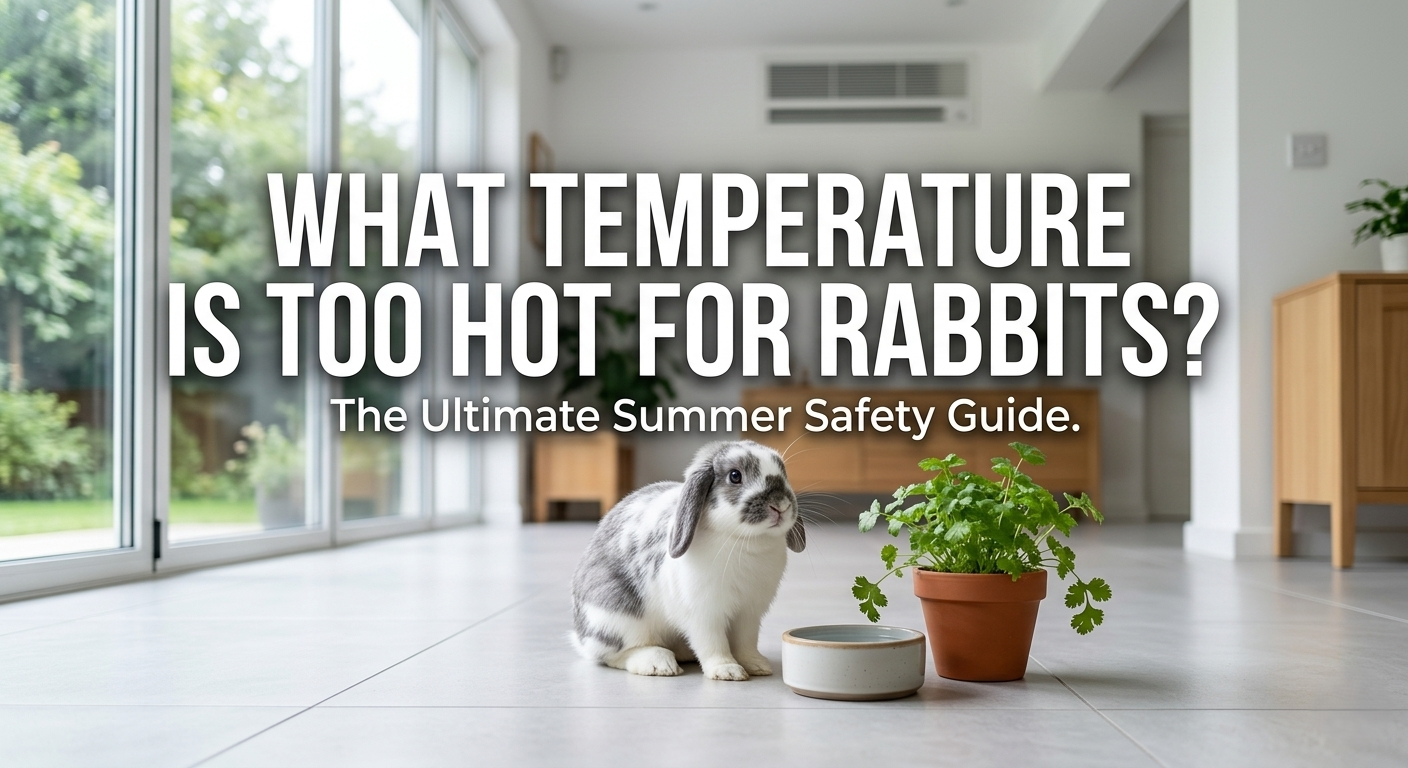
“Many new owners ask, what temperature is too hot for rabbits, before the summer season peaks
Rabbits are sensitive animals. Unlike dogs, they cannot pant effectively to cool down. Unlike humans, they have no sweat glands across their body. This makes heat one of the most serious threats to your bunny’s life, especially during USA summers. Read this guide before the temperature climbs. It could save your rabbit’s life. To understand the risks, we must define exactly what temperature is too hot for rabbits in an indoor or outdoor setting.
Quick Answer :Safe temperature range for rabbits: 55°F to 70°F (13°C to 21°C)
Risky zone: Above 80°F (27°C) watch your rabbit closely.
Emergency zone: 85°F and above (29°C+) this is life-threatening. Act immediately.
The Safe Range vs. The Danger Zone

Every owner needs to understand what temperature is too hot for rabbits to prevent heat exhaustion. Rabbits thrive in cool, stable environments. The ideal room temperature for a rabbit is between 55°F and 70°F. Once the temperature rises above 80°F, your rabbit enters the risky zone. You need to take action right away. At 85°F or above, your rabbit can suffer heatstroke in a very short time. This is a medical emergency. Do not wait. Always remember that 85°F is the definitive answer to what temperature is too hot for rabbits to handle safely.”
Beyond the Thermometer: Why Humidity is the Silent Killer

Humidity changes the calculation of what temperature is too hot for rabbits, making 80°F feel much deadlier.To truly understand what temperature is too hot for rabbits, you have to look beyond the basic thermometer reading and account for the heat index.”. Humidity plays an equally dangerous role.On a humid day, 80°F can feel like 90°F or more. This is called the Heat Index, or RealFeel temperature. Rabbits cool themselves mainly by releasing heat through their large ears. Blood vessels in the ears expand, allowing body heat to escape into the surrounding air. When the air is already hot and humid, this process slows down or stops completely. Heat builds up inside the body with no way out.
Why Rabbits Cannot Sweat Like Humans
Humans cool down through sweating. Sweat evaporates from the skin and carries heat away from the body. Rabbits do not have this ability. Their sweat glands are limited and not effective for cooling. This means a rabbit in a hot, humid room has almost no natural way to lower its own body temperature. You must step in and help.
“Before heatstroke sets in, you should identify what temperature is too hot for rabbits and monitor their behavior.”
Signs and Symptoms of Rabbit Heatstroke (The Checklist)

Knowing the symptoms of heatstroke can mean the difference between life and death for your rabbit. Symptoms appear in two stages. The early signs give you time to act. The emergency signs mean your rabbit is in critical danger.
| Early Warning Signs | Emergency Signs |
| Red or hot ears | Open-mouth breathing or panting |
| Lethargy or slow movement | Drooling or excessive salivation |
| Wetness around the nose | Trembling or muscle weakness |
| Shallow, faster breathing | Head tilting or loss of balance |
| Sitting in a stretched-out position | Seizures or unresponsiveness |
Why Do a Rabbit’s Ears Turn Red When Hot?
Red ears are one of the first visible signs of heat stress. When a rabbit gets too warm, blood rushes to the ears in an attempt to release heat. The blood vessels dilate, which makes the ears appear bright pink or red. If you notice this, move your rabbit to a cooler area immediately. Red ears are a warning, not an emergency. But ignoring them can lead to one quickly. Risk levels vary, but the baseline for what temperature is too hot for rabbits remains a critical safety standard for all breeds.
High-Risk Groups: Is Your Bunny More Vulnerable?

For long-haired breeds, the question of what temperature is too hot for rabbits becomes even more critical due to their thick fur. Some rabbits face a much higher risk than others. If your bunny falls into one of these groups, you need to be extra careful during summer.
Long Haired Breeds: Angoras, Lionheads, and Cashmeres
Long haired rabbits carry a heavy coat that traps heat close to their skin. Breeds like the Angora, Lionhead, and Cashmere are at serious risk in warm weather. Their thick fur prevents heat from escaping naturally. A regular summer day can become dangerous for them very fast. If you own a long-haired breed, consider a gentle trim before summer. Always consult a groomer with rabbit experience.
Giant Breeds and Lop Rabbits
Giant breeds like Flemish Giants have a large body mass that retains more heat.Lop rabbits, known for their floppy ears, have reduced ear surface area compared to upright-eared breeds. This limits their natural ability to release body heat.
Senior Rabbits and Young Kits
Older rabbits have weaker immune systems and slower physical responses. They take longer to recognize and react to rising heat. Very young rabbits, especially kits under eight weeks, have not fully developed their body temperature regulation systems. Both age groups need additional monitoring and faster intervention during hot weather.
Overweight Rabbits
Excess body fat works like an insulating layer. Overweight rabbits struggle to release heat and tire more quickly in warm conditions. If your rabbit is overweight, consult a vet about diet and weight management before summer arrives.
7 Proactive Ways to Keep Outdoor Rabbits Cool

When placing a hutch outside, consider what temperature is too hot for rabbits when they are exposed to direct sunlight. Outdoor rabbits are exposed to the full force of the sun. These steps can protect your rabbit before heat becomes a problem.
1. Position the Hutch in Moving Shade

The sun moves throughout the day. A spot that is shaded in the morning may be in full sun by the afternoon. Observe where the shade falls at different times of day. Position the hutch in a spot that stays shaded from late morning through late afternoon, when heat is at its peak.
2. Improve Airflow Through the Hutch

Stagnant hot air is just as dangerous as direct sunlight. Make sure the hutch has proper ventilation on multiple sides. Raise the hutch slightly off the ground if possible. This allows air to circulate underneath and reduces heat buildup.
3. Use the Frozen Water Bottle Method

This is one of the most effective and affordable cooling hacks for rabbits. Fill a large plastic bottle with water and freeze it overnight. Wrap it in a light cloth or towel and place it inside the hutch. Your rabbit will lie against it when they need to cool down. Replace the bottle with a fresh one as it thaws.
4. Place Slate or Ceramic Tiles Inside

Natural stone tiles stay cool for extended periods. Place a few ceramic or slate tiles on the floor of the hutch. Rabbits instinctively seek out cool surfaces and will rest on the tiles when they feel warm.
5. Use a Cooling Mat

Pet cooling mats designed for small animals are available at most pet stores. These work through pressure-activated gel that absorbs body heat. They do not need electricity or freezing and can be left in the hutch throughout the day.
6. Provide Constant Fresh Water

Dehydration makes heat stress worse and faster. Check your rabbit’s water bottle or bowl multiple times daily during summer. Offer cold water and refresh it frequently. Consider adding a second water source as a backup.
7. Misting: Use With Caution

Light misting of the surrounding area can lower the temperature around the hutch. However, misting the rabbit directly can raise humidity levels and make cooling harder. If you mist, keep it indirect. Aim for the air and surfaces around the hutch, not the rabbit’s fur.
Keeping Indoor Rabbits Safe: The AC and Fan Dilemma

Indoor rabbits have an advantage during summer, but they are not automatically safe. The way you use cooling equipment matters.
Best Air Conditioning Settings for Rabbits
Set your air conditioner to maintain a room temperature between 60°F and 70°F. This is the most comfortable range for rabbits. Avoid sudden temperature drops. If you come home to a very hot house, lower the temperature gradually over 30 to 40 minutes. A sudden cold blast can cause respiratory stress. Keep the room where your rabbit lives consistently cool. Avoid moving them back and forth between hot and cold areas.
Why a Fan Alone Is Not Enough
Fans cool humans by speeding up sweat evaporation. Since rabbits do not sweat, a fan blowing warm air over them provides very little relief. A fan can help if it is circulating cool air in an air-conditioned room. But in a room with no AC, a fan alone will not prevent heatstroke. Never point a fan directly at your rabbit. Continuous forced air can dry out their nasal passages and cause respiratory issues.
Summer Diet and Hydration Tweaks

Hydration is key once you realize what temperature is too hot for rabbits and how fast they lose fluids.” What your rabbit eats and drinks in summer can directly affect how well they handle heat. Small changes to their diet can make a real difference.
Hydrating Vegetables to Add in Summer
Certain vegetables have a high water content and can supplement your rabbit’s fluid intake. Safe options include cucumber, celery (in small amounts), romaine lettuce, and fresh herbs like cilantro and parsley. Introduce new vegetables gradually. A sudden change in diet can upset a rabbit’s digestive system, which is very sensitive. Avoid iceberg lettuce. It has almost no nutritional value and can cause loose stools.
Electrolytes: When and How to Use Them
In cases of mild heat stress or if your rabbit has been in a hot environment for an extended time, electrolytes can help restore fluid balance. You can find rabbit-safe electrolyte supplements at pet stores or online. Look for products designed specifically for small animals. Do not use human sports drinks or cat and dog electrolyte products. These contain ingredients that can be harmful to rabbits. If your rabbit refuses to drink or shows any signs of heat stress, contact a vet rather than treating at home.
Emergency First Aid: What to Do (And NOT to Do)

Never wait until an emergency to learn what temperature is too hot for rabbits; prevention is the best medicine. If you suspect your rabbit has heatstroke, every second counts. Follow these steps carefully.
What to Do
- Move your rabbit immediately. Bring them to the coolest room in the house. Avoid air vents blowing directly on them.
- Dampen the ears with lukewarm water. The ears are the main heat-release point. Use a cloth dipped in lukewarm water (not cold) and gently press it to the ears.
- Offer water. If your rabbit is conscious and alert, offer small sips of cool (not ice-cold) water.
- Call your vet immediately. Heatstroke is a veterinary emergency. Do not wait to see if your rabbit improves on their own.
What NOT to Do
Do NOT submerge your rabbit in ice water or cold water. This causes thermal shock. The rapid temperature change triggers a physical crisis that can stop the heart. This is one of the most common and dangerous mistakes pet owners make. Do NOT use ice packs directly on the body. The sudden cold on warm skin can cause the same shock response. Do NOT leave your rabbit unattended after a heatstroke event. Even if they appear to recover, internal damage may have occurred. A vet check is essential.
The Hidden Threat: Preventing Flystrike in Summer

Most rabbit owners focus on heatstroke during summer, but there is another danger that often goes unnoticed: Flystrike. Flystrike, or myiasis, occurs when flies lay eggs on a rabbit, usually around the hindquarters. The eggs hatch into maggots within hours. These maggots feed on the rabbit’s flesh and release toxins. It is a medical emergency and can be fatal within 24 hours if untreated.
Why Heat Increases the Risk
Warm temperatures increase fly activity significantly. Flies are more attracted to damp, soiled fur, which is more common in hot weather when rabbits sweat slightly around the tail area. Overweight or arthritic rabbits who cannot groom themselves properly are at the highest risk.
How to Prevent Flystrike
- Check the area under your rabbit’s tail daily during summer
- Clean the hutch every day to remove droppings and wet bedding
- Keep your rabbit at a healthy weight so they can groom themselves
- Use a rabbit-safe fly repellent recommended by your vet
- If you see any sign of eggs or maggots, contact a vet immediately
Always keep a thermometer near your pet’s enclosure to monitor what temperature is too hot for rabbits in real-time.
Conclusion and Summer Safety Checklist
By knowing what temperature is too hot for rabbits, you are now equipped to keep your furry friend safe all summer long. Rabbits are more vulnerable to heat than most people realize. The good news is that with the right knowledge, you can protect your bunny through even the hottest months. Start preparing before summer arrives. Do not wait for a hot day to discover your setup is not adequate.
Use this checklist to make sure you are ready:
Summer Rabbit Safety Checklist:
- ☐ Temperature in rabbit’s area stays below 80°F at all times
- ☐ Fresh, cool water available and refreshed at least twice daily
- ☐ Hutch positioned in stable shade, especially 11am to 4pm
- ☐ Frozen water bottle or cooling tiles available in the hutch
- ☐ Air conditioning set between 60°F and 70°F for indoor rabbits
- ☐ Daily check of hindquarters for signs of flystrike
- ☐ No fans pointing directly at the rabbit
- ☐ Hydrating vegetables introduced gradually into summer diet
- ☐ Emergency vet number saved and accessible
- ☐ All family members know the heatstroke warning signs
Your rabbit depends on you to keep them safe. With the steps in this guide, you have everything you need to give them a comfortable, healthy summer.