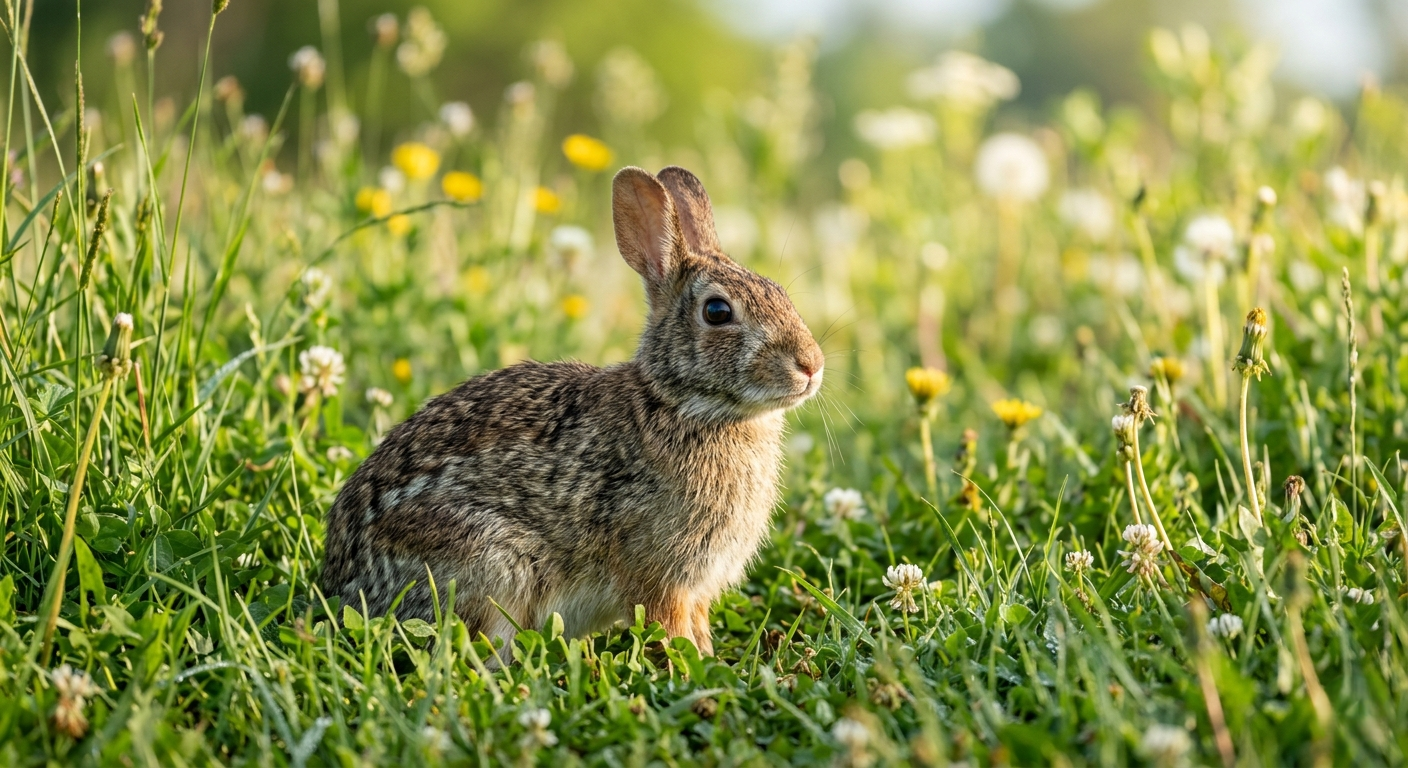
You just spotted a fluffy wild rabbit in your yard and you want to know what it eats. This guide covers everything about what do wild rabbits like to eat, from their daily diet to dangerous foods you should never offer them.
Quick Answer: Wild rabbits primarily eat grasses, weeds, clovers, and dandelions. About 80% of what do wild rabbits like to eat comes from high fiber grasses. They also munch on garden greens, tree bark in winter, and leafy plants. Never feed them bread, carrots in large amounts, or processed food.
Most Americans are familiar with Eastern Cottontails and Jackrabbits. These two species are the most common wild rabbits spotted in backyards, parks, and open fields across the USA. You might think they love carrots because of Bugs Bunny. That is actually a myth, and feeding carrots regularly can harm them. Let us dig into the real answer to what do wild rabbits like to eat.
Rabbits make wonderful companions too learn how a rabbit can become an emotional support animal.
The Foundation of a Wild Rabbit’s Diet (The 80% Rule)

If you want to truly understand what do wild rabbits like to eat, start here. Grasses make up around 80% of their entire diet. High fiber grasses keep their digestive systems running smoothly. Without enough fiber, rabbits can develop a dangerous condition called GI Stasis, which can be fatal.
Top Grasses Wild Rabbits Eat

- Timothy grass (their top favorite)
- Orchard grass
- Meadow grass
- Bluegrass
- Fescue
These grasses grow naturally across most of North America. Wild rabbits graze on them throughout the day.
Wild Forbs and Weeds They Love

Beyond grasses, wild forbs and weeds are a major part of what do wild rabbits like to eat on a daily basis.
- Clover (red and white both work)
- Dandelions (leaves, stems, and flowers)
- Plantain leaves (not the banana, the ground herb)
- Chickweed
- Wild strawberry leaves
These plants grow naturally in most American lawns and fields. If you have a wild garden, you are already hosting a rabbit buffet.
Seasonal Eating Patterns: How the Diet Changes All Year

What do wild rabbits like to eat changes significantly with each season. Their survival depends on adapting to whatever food nature provides.
Spring and Summer: The Feast Season

Spring and summer are the most abundant seasons for cottontail rabbit diet. Fresh greens are everywhere.
- Lush green grasses are the main focus
- Clover blooms are a special treat
- Succulent plant stems provide moisture
- Dandelion greens are eaten in large amounts
- Garden vegetables become targets
During summer, Eastern Cottontails are most active at dawn and dusk. You will often spot them grazing in your yard at these times.
Fall: Preparing for the Cold

As temperatures drop, what do wild rabbits like to eat begins to shift. They start eating more calorie rich foods to build up energy reserves.
- Dried grasses and seed heads
- Fallen leaves from fruit trees
- Berry bushes and their stems
- Garden leftovers and root vegetables
Winter: The Survival Phase

Winter rabbit survival is a real challenge. Green plants disappear under snow, so wild rabbits must adapt completely.
This is the season when what do wild rabbits like to eat becomes hardest to find. Their diet shifts to woody plant materials.
- Maple tree bark and twigs
- Birch and oak branches
- Willow twigs (a favorite during cold months)
- Dried buds from shrubs and hedges
- Conifer needles in desperate times
Wild rabbits will gnaw at the base of young trees to reach the bark underneath the snow. This is why gardeners sometimes find small trees stripped of bark near the ground in winter. If you want to help during harsh winters, leaving small piles of timothy hay in a sheltered spot is one of the safest ways to support them. This is a natural part of their diet and will not make them dependent on you.
The Garden Dilemma: What Wild Rabbits Love in Your Backyard

If you have a garden, you already know the answer to what do wild rabbits like to eat near human homes. They will eat almost anything green and tender.
Favorite Garden Vegetables
- Romaine and leaf lettuce (not iceberg)
- Spinach
- Beet greens
- Swiss chard
- Pea shoots
- Kale
Notice that iceberg lettuce is not on the safe list. It has almost no nutrition and high water content that can cause digestive problems.
Best Garden Plants for Rabbits

| Plant | Type | Rabbit Preference |
|---|---|---|
| Clover | Weed/Ground cover | Very High |
| Dandelion | Weed | Very High |
| Romaine Lettuce | Vegetable | High |
| Plantain | Wild herb | High |
| Chickweed | Weed | High |
| Spinach | Vegetable | Moderate |
| Beet Greens | Vegetable top | Moderate |
The Hydration Factor

Wild rabbits rarely drink standing water. In the wild, rabbits fulfill the majority of their water requirements through the moisture rich vegetation they forage. Morning dew on grass blades is a major water source. Juicy plant stems and fresh greens also provide the moisture they need to stay hydrated throughout the day.
If you want to help, placing a shallow dish of clean fresh water in your yard can be a kind gesture. Change the water daily and keep the dish clean to avoid spreading disease.
Critical Warning: Toxic Foods You Must Avoid

Understanding what do wild rabbits like to eat is only half the story. Knowing what is dangerous is just as important.
Why Bread and Processed Carbs Are Deadly

Many people see a wild rabbit and think throwing some bread or crackers is a kind thing to do. It is not. Rabbits have a very sensitive digestive system. Bread, crackers, chips, and any processed carbohydrates can cause GI Stasis. GI Stasis means the digestive system stops moving. Gas builds up rapidly. Without treatment, a rabbit can die within 24 hours. Even one or two pieces of bread can trigger this in smaller rabbits.
Safe vs. Toxic Foods at a Glance

| SAFE FOODS | TOXIC FOODS |
|---|---|
| Timothy grass | Bread and crackers |
| Clover and dandelions | Onions and garlic |
| Plantain leaves | Rhubarb |
| Romaine lettuce | Nightshade plants |
| Spinach (small amounts) | Avocado |
| Beet greens | Iceberg lettuce |
| Chickweed | Potatoes and tomato leaves |
| Willow and maple bark (winter) | Processed human food |
The Truth About Carrots

Carrots are not a natural part of what do wild rabbits like to eat in the wild. They are root vegetables with very high sugar content. A wild rabbit that eats too many carrots can develop blood sugar imbalances and digestive upset. An occasional tiny piece is not immediately harmful, but it should never become a regular wild rabbit treat.The carrot myth comes entirely from cartoons. Real wild rabbits would barely encounter carrots in nature.
Other Toxic Plants to Watch For

- Rhubarb leaves and stems (highly toxic to rabbits)
- Onions and garlic (damage red blood cells)
- Nightshade plants including tomato leaves
- Potatoes and their green parts
- Avocado (toxic to most small animals)
- Any mushroom variety
If you grow any of these in your garden, consider using a low wire fence around those specific plants rather than the entire garden.
Human Rabbit Coexistence: Tips for Gardeners

Living alongside wild rabbits does not have to be a battle. With a few smart strategies, both your garden and local cottontail rabbit diet needs can be respected.
Plant a Sacrificial Patch

A sacrificial patch is a small area of your yard where you intentionally grow plants that are part of what do wild rabbits like to eat. Plant clover, dandelions, or plantain in one corner. When rabbits have their own food source, they are much less likely to invade your vegetable beds. This is one of the most effective and wildlife friendly strategies a gardener can use.
Providing Supplemental Hay in Winter

During heavy snowfall, wild rabbits struggle to find food. Placing a small amount of timothy hay under a bush or near a sheltered hedge can genuinely help them survive. Timothy hay is the safest supplemental food because it mirrors what do wild rabbits like to eat naturally. Avoid pellets or commercial rabbit food because they contain additives that wild rabbits cannot process well. Always place food in a sheltered spot. An open yard leaves rabbits exposed to predators while eating.
The Golden Rule: Observe, Do Not Over Feed

The best way to support wild rabbits is to observe them from a distance. They are naturally shy animals and frequent human contact stresses them out. Over feeding is a real risk. When humans provide easy food, wild rabbits lose their natural foraging instincts. This makes them vulnerable when food sources change or when they move to a new area.
Keep wildlife wild. Maintaining a respectful distance is the most effective way to ensure their well being.
If you feel a deep bond with rabbits, you might be surprised to learn that rabbits can also serve as emotional support animals for their owners.
Frequently Asked Questions
Do wild rabbits eat birdseed?
Birdseed is not part of what do wild rabbits like to eat naturally. However, they will eat fallen seeds below bird feeders when other food is scarce. Sunflower seeds are high in fat and not ideal for rabbits. If rabbits are raiding your bird feeder, raise it higher or use a squirrel proof stand.
Is it okay to feed wild rabbits fruit?
Wild rabbit treats should not include fruit regularly. Fruit contains high amounts of natural sugar which wild rabbits are not adapted to handle in large quantities. Wild rabbits may encounter fallen fruit occasionally in nature, but even then it is consumed in small amounts. Do not make fruit a habit.
What do you feed an orphaned baby wild rabbit?
This is the most important FAQ in this entire guide. If you find an orphaned baby wild rabbit, please do not try to feed it yourself. Baby rabbits have extremely specific dietary needs that are very different from adult cottontail rabbit diet requirements. Feeding them the wrong thing, including cow milk, goat milk, or even lettuce, can kill them within hours. Call a licensed wildlife rehabilitator immediately. In the USA, you can find one through the National Wildlife Rehabilitators Association at nwrawildlife.org or through your local animal control office. Keep the baby warm, dark, and quiet until help arrives. Do not try to nurse it yourself.
How often do wild rabbits eat?
Wild rabbits are grazers. They eat small amounts continuously throughout the day rather than one or two large meals.As crepuscular creatures, these rabbits reach their peak activity levels during the low light hours of dawn and twilight. During these windows is when you will see them most actively exploring what do wild rabbits like to eat in your yard.
Do wild rabbits need water?
Yes, they do. But they mostly get it from fresh plants, morning dew, and juicy stems. In dry summer months, a shallow clean dish of water placed in a quiet area of your yard can be genuinely helpful for local wildlife including rabbits, birds, and squirrels.
Conclusion: Respecting the Wild Diet
Now you have a full picture of what do wild rabbits like to eat across every season and every life stage. Wild rabbits thrive on a natural diet of grasses, weeds, clovers, and seasonal plant materials. They do not need our help most of the time. When you do want to support them, stick to what mirrors the cottontail rabbit diet found in nature: fresh hay in winter, clean water in summer, and a clover patch they can call their own. Avoid processed food, bread, excess fruit, and anything from the toxic list above. A well-meaning snack can become a life-threatening mistake for these small animals.
The most powerful thing you can do is to observe them, appreciate them from a distance, and protect the natural spaces where wild rabbits can find everything they need on their own. Wild rabbits have been foraging successfully for thousands of years. They know exactly what do wild rabbits like to eat. Our job is simply to make sure we do not get in the way.
And if you’re already a rabbit lover, explore whether a rabbit could be your emotional support animal a bond that goes far beyond the garden.