
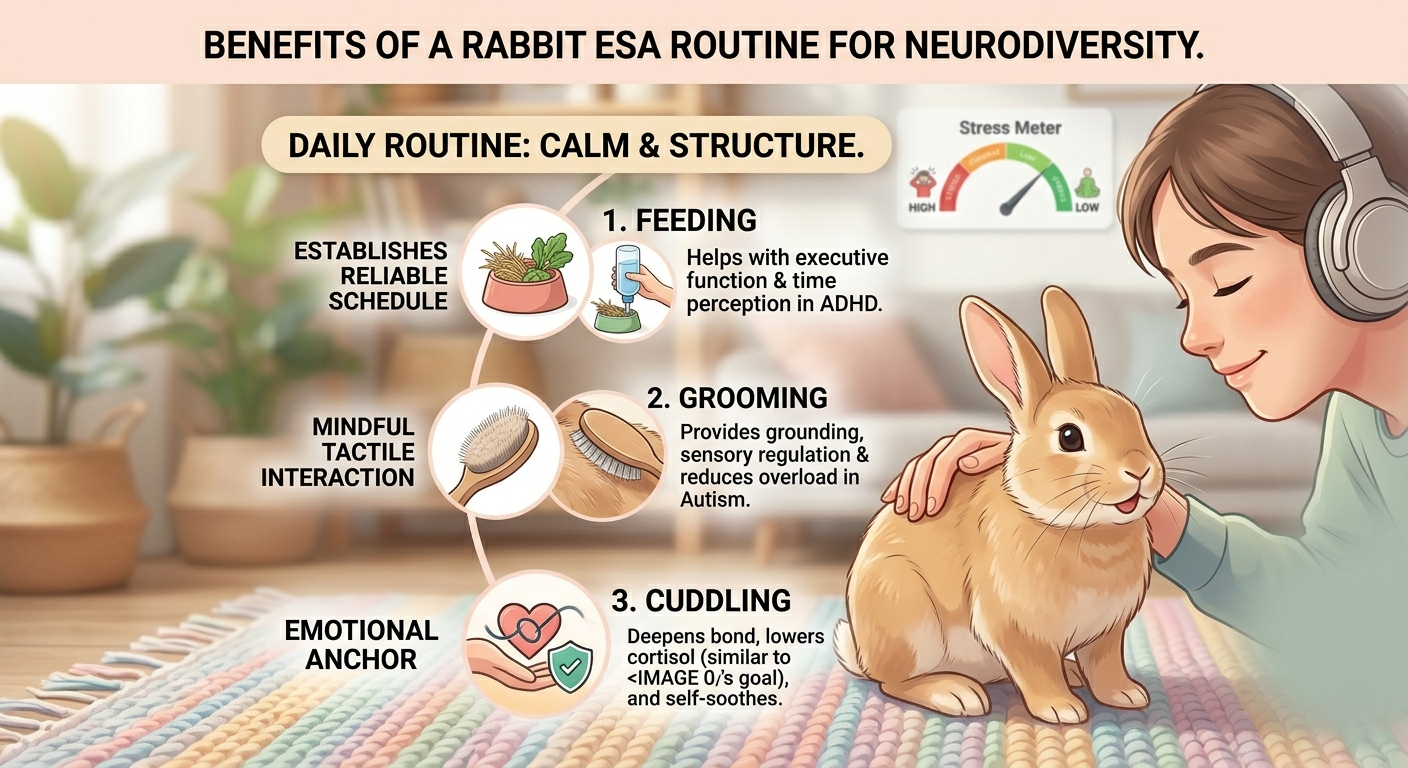
If you are dealing with anxiety, depression, or any emotional struggle, you may be wondering: can a rabbit be an emotional support animal? The short answer is yes. Rabbits are fully recognized as emotional support animals under U.S. federal law. However, being a responsible ESA owner means knowing how to care for them; for instance, understanding what Mini Lop rabbits eat is essential for keeping your companion healthy
Quick Answer: Can a Rabbit Be an Emotional Support Animal?
Yes. A rabbit can legally be an emotional support animal (ESA) in the United States. Under the Fair Housing Act (FHA), landlords must allow your ESA rabbit even in no pet buildings. You need a valid letter from a Licensed Mental Health Professional (LMHP) to qualify.
What Is an Emotional Support Animal?

An emotional support animal is a pet prescribed by a Licensed Mental Health Professional. It provides comfort to people living with anxiety, depression, PTSD, or phobias. Unlike service animals, ESAs do not need special training. Their presence alone is their job. Can a rabbit be an emotional support animal the same way a dog or cat can? Absolutely, no law limits ESA status to a specific species.
The Legal Truth: What the Law Actually Says

Fair Housing Act (FHA)
The Fair Housing Act requires landlords to make reasonable accommodations for tenants with disabilities. They must allow your ESA rabbit even in a strict no pets building.Your landlord cannot charge a pet deposit or deny your application because of your rabbit.
Can a rabbit be an emotional support animal in rented housing?
Yes, and federal law fully protects your right.
The 2021 Airline Rule Change
In 2021, the U.S. Department of Transportation updated its air travel rules. Airlines are no longer required to accommodate emotional support animals in the cabin for free. Most major airlines now treat ESA rabbits as regular pets, subject to fees or cargo rules. Your housing rights remain fully intact, but plan ahead if you travel often.
ESA vs. Service Animal: A Critical Difference

Service animals are specially coached to carry out particular duties that assist individuals with disabilities. Under the ADA, only dogs and sometimes miniature horses qualify. Rabbits cannot legally be service animals. However, can a rabbit be an emotional support animal under the FHA? Yes, without any question. Service animals simply have broader public access rights that ESA rabbits do not share.
Why Choose a Rabbit as Your Emotional Support Animal?

People wonder can a rabbit be an emotional support animal that truly helps with mental health. The answer is yes, and rabbits offer unique benefits that many other animals simply cannot match.
The Calming Power of a Rabbit

Rabbits are quiet, gentle, and naturally soothing. Stroking soft fur has been shown to lower cortisol and reduce heart rate. The gentle rhythm of a rabbit chewing hay or grooming itself is surprisingly grounding. This makes them ideal for those dealing with anxiety or panic disorders.
Perfect for Small Spaces
Most people asking can a rabbit be an emotional support animal live in apartments or small homes. Rabbits are ideal for this situation. They do not bark, they do not need daily outdoor walks, and they thrive indoors without much space. They are one of the most apartment friendly ESA options available.
Ideal for Neurodivergent Individuals
Rabbits are a great fit for people with ADHD or autism. Their predictable routines and quiet nature reduce sensory overload.
Caring for a rabbit creates a gentle daily structure that supports emotional regulation. If you are asking can a rabbit be an emotional support animal for someone with ADHD or autism, the answer is a strong yes.
How to Legally Qualify for an ESA Rabbit

Step 1: Identify Your Qualifying Condition
To qualify, you must have a mental health condition recognized by the DSM 5. Common conditions include Generalized Anxiety Disorder, Major Depressive Disorder, PTSD, Panic Disorder, ADHD, Autism Spectrum Disorder, Bipolar Disorder, and Phobias.
Step 2: Speak to a Licensed Mental Health Professional
The only legal way to get an ESA letter is through a Licensed Mental Health Professional (LMHP). This includes licensed therapists, psychologists, psychiatrists, and clinical social workers in your state. The LMHP will evaluate your condition and determine whether an ESA would benefit your treatment. Without this step, no other document holds any legal value.
Step 3: Get Your ESA Letter
Your ESA letter must include the LMHP’s license number and state, confirmation of your qualifying condition, and a statement that an ESA is part of your treatment. It must also carry the LMHP’s signature and date. That is it. No registration. No vest. No ID card needed.
WARNING: Do Not Fall for ESA Scams

There is no official government database or registry for emotional support animals. Any website selling you a certificate, ID card, or branded vest is taking your money for something with zero legal value.
Can a rabbit be an emotional support animal without a paid certificate? Yes. The only thing that matters is a letter from your licensed mental health professional. Do not waste money on anything else.
Choosing the Best Rabbit Breed for Emotional Support

Not all rabbits have the same personality. If you are asking can a rabbit be an emotional support animal in a hands-on, affectionate way, breed matters a lot.
Holland Lop
Holland Lops are small, friendly, and love human interaction. Their floppy ears and round faces make them naturally calming to look at. They enjoy being held and are gentle with people of all ages. They make a great first ESA rabbit for most households.
Mini Rex
The Mini Rex has a uniquely soft, velvet-like coat that makes petting incredibly soothing. They are calm, curious, and adapt well to apartment living. For anyone who relies on tactile comfort, the Mini Rex is one of the best choices available. Their coat alone makes them stand out as an ESA breed.
Flemish Giant
Flemish Giants stand out due to their massive build and remarkably patient, easy going personality. Their size makes them feel more like a dog in terms of presence and companionship. They are patient and have a steady temperament that suits anxious individuals very well. They are truly the gentle giants of the rabbit world. If you are also wondering what your rabbit should eat, this guide on what Mini Lop rabbits eat is a helpful starting point for rabbit nutrition.
Living with an ESA Rabbit: Practical Tips

Bunny Proofing Your Rental
One of the biggest landlord concerns is property damage. Rabbits chew naturally, but you can manage it completely. Cover exposed wires with cable protectors and use furniture leg guards or bitter apple spray on wooden surfaces. Give your rabbit plenty of chew toys and hay to redirect their chewing instincts.
Litter Training
Rabbits are naturally clean animals and can be litter trained fairly easily. Place a litter box in the corner your rabbit already prefers. Use paper based litter, not clumping cat litter. Once litter trained, a rabbit produces far less odor than most pets, making them very practical for apartment living.
Monthly Cost Breakdown

Here is a realistic estimate of what it costs to keep an ESA rabbit each month:
| Item | Monthly Cost (USD) |
| Timothy Hay | $15 to $25 |
| Pellets | $5 to $10 |
| Fresh Greens | $10 to $15 |
| Litter | $10 to $15 |
| Vet Fund (averaged) | $20 to $40 |
| Chew Toys / Enrichment | $5 to $10 |
| Total Estimate | $65 to $115 |
Rabbits are one of the most affordable ESA options compared to dogs or cats. Can a rabbit be an emotional support animal that is also budgetfriendly? Absolutely yes.
Talking to Your Landlord About Your ESA Rabbit

Many landlords hesitate when they hear the word rabbit. If they question whether can a rabbit be an emotional support animal, calmly explain it is fully protected under the Fair Housing Act. Present your ESA letter upfront and offer to show them your bunny proofing plan. Being transparent and proactive builds trust quickly and solves most concerns before they grow. Your landlord cannot legally deny your ESA request under the FHA. They also cannot charge a pet deposit for your ESA rabbit under any circumstances.
Frequently Asked Questions
Can a rabbit be an emotional support animal in all 50 states?
Yes. The Fair Housing Act is a federal law and applies in every state across the USA.
Do ESA rabbits need to be spayed or neutered?
While not mandated by law, opting for this is highly encouraged for the animal’s well being and behavior. Spayed or neutered rabbits are calmer, less territorial, and live longer.
Can a landlord charge a pet deposit for an ESA rabbit? No. Under the FHA, landlords cannot charge a pet deposit for an ESA. They may only charge for actual damages after move-out if your rabbit causes property damage.
Can I have more than one ESA rabbit?
Yes, in most cases. Your ESA letter must include both animals and each must be part of your treatment plan as assessed by your LMHP.
Does my ESA rabbit need certifications or training?
No official certification is necessary; the only legal requirement is a legitimate ESA letter issued by a Licensed Mental Health Professional. Can a rabbit be an emotional support animal without special skills? Yes, being present and comforting is enough.
Can a rabbit be an emotional support animal for a child?
Yes. Children with qualifying conditions benefit greatly from ESA rabbits, especially those with autism or anxiety disorders.
Final Thoughts
So, can a rabbit be an emotional support animal? Without a doubt, yes. Rabbits are quiet, gentle, affordable, and deeply comforting for people dealing with mental health challenges. Can a rabbit be an emotional support animal that changes your daily life? For thousands of people across the USA, it already has. Speak to a Licensed Mental Health Professional, get your ESA letter, and know your rights under the Fair Housing Act. Skip the fake registries and paid certificates. Focus on building a real bond with your rabbit. That bond is what makes emotional support animals work in the first place.