Marsh rabbits are semiaquatic mammals built for swamps and wetlands, and their diet proves it. So, what do marsh rabbits eat in the wild? Here is everything you need to know.
| Quick Answer: What Do Marsh Rabbits Eat in the Wild?Marsh rabbits are strict herbivores that eat: Cattails, water hyacinth, and duck potatoWild grasses, sedges, and rushesBerries, twigs, and woody plant barkRoots and underground bulbsDiet varies by season and habitat. |
The Core Diet: What Do Marsh Rabbits Eat?

Marsh rabbits are strictly herbivores that rely on the semi-aquatic plants, wild grasses, and woody vegetation found in their wet habitats. Their flexible diet changes with the seasons, ensuring they get both nutrients and moisture directly from the swamp.
Aquatic and Wetland Vegetation

What do marsh rabbits eat in the wild near water? Mostly aquatic plants like these:
- Cattails stems, leaves, and seed heads
- Water hyacinth soft floating leaves and stems
- Duck potato starchy underground tubers
- Marsh pennywort low growing wetland herb
These plants are abundant and easy to reach along the water’s edge.
Wild Grasses, Rushes, and Sedges

Away from open water, what do marsh rabbits eat in the wild? Grasses and sedges.
- Sawgrass a Florida wetland staple
- Cordgrass key for coastal subspecies
- Ammania, rushes, and soft sedges
These plants provide fiber and natural hydration from their moist stems.
Woody Plants, Twigs, and Berries

In colder months, what do marsh rabbits eat in the wild shifts to tougher foods.
- Wild blackberries berries, leaves, and stems
- Tree bark and shrub twigs
- Rhizomes dug from muddy soil
This flexibility keeps them fed through every season.
Seasonal Diet Shifts: Summer vs. Winter

During spring and summer, marsh rabbits feast on an abundance of lush green grasses, aquatic stems, and fresh clover. In the winter, when greenery fades, they adapt by switching to a tougher diet of woody twigs, plant roots, and tree bark.
Spring and Summer Peak Abundance

Soft greens, aquatic flowers, and fresh stems dominate the summer diet. Marsh rabbits forage most actively at dawn and dusk when food is plentiful.
Fall and Winter Survival Mode

As plants die back, marsh rabbits switch to bark, dried twigs, and buried roots. Underground plant parts stay intact under frozen soil and become a critical food source.
Coprophagy: The Digestion Secret

Marsh rabbits eat their own soft droppings, a process called coprophagy.
These soft pellets (cecotropes) are packed with B-vitamins and proteins not absorbed the first time. This second digestive pass allows marsh rabbits to extract the highest possible nutrient value from fibrous marsh vegetation.
Foraging Behavior and Habitat

Marsh rabbits are primarily nocturnal foragers that rely on dense vegetation and established runway trails to safely look for food. They rarely venture far from the water’s edge, using their excellent swimming skills to forage for aquatic plants while staying protected from predators.
Nocturnal and Crepuscular Habits

Marsh rabbits feed at night and around dawn and dusk to avoid predators. They move slowly through dense vegetation, staying close to the water’s edge.
Underwater and Trail Foraging

Marsh rabbits wade into shallow water to reach duck potato tubers and aquatic stems. They leave narrow, low feeding trails through tall grasses, a clear sign of their presence.
Subspecies Variations: Diet Across Locations

A marsh rabbit’s specific diet depends heavily on its geographical location and subspecies. While mainland populations feast on widespread freshwater cattails and water hyacinths, the endangered Lower Keys marsh rabbit relies strictly on limited coastal species like sawgrass and cordgrass.
Carolina Marsh Rabbit (S. p. palustris)

Lives along the Atlantic coastal plain from Virginia to Florida. Has the most diverse diet: cattails, blackberries, sedges, and aquatic herbs.
Florida Marsh Rabbit (S. p. paludicola)

Found near freshwater marshes and wet prairies across central and southern Florida Feeds heavily on sawgrass, supplemented by berries and rhizomes.
Lower Keys Marsh Rabbit (S. p. hefneri) Endangered

This critically endangered subspecies survives only in the Florida Keys. Its diet depends almost entirely on cordgrass and sawgrass in shrinking coastal strips. Rising sea levels and habitat loss are directly threatening its food supply. Protecting these coastal grasses is essential for its survival.
How Climate Change and Sea Level Rise are Threatening Their Food Supply

Rising sea levels are forcing saltwater into freshwater marshes, destroying primary food sources like cattails and duck potato. Additionally, extreme hurricanes and flooding submerge their foraging grounds, forcing these rabbits to struggle for survival on a temporary diet of tree bark.
The Invasion of Saltwater into Freshwater Marshes

Saltwater intrusion from rising sea levels is destroying freshwater plants like cattails and duck potato along the US coastline. As these vital food sources vanish, marsh rabbits are left with less nutritious, salt-tolerant vegetation, severely shrinking their food supply.
Extreme Weather and Foraging Disruptions

Frequent hurricanes and severe flooding submerge the marshlands, stripping away primary grasses and aquatic plants. In the aftermath, marsh rabbits are forced onto an emergency survival diet of tree bark and woody twigs, which lacks the essential moisture and nutrition of their normal food.
The Impact of Invasive Predators on Marsh Rabbit Foraging Behavior

The introduction of invasive predators, like the Burmese python in the Florida Everglades, has drastically altered how marsh rabbits look for food. To avoid being hunted, these rabbits have changed their natural feeding routines, forcing them to forage under much denser plant cover and stay hidden.
The Burmese Python Threat in the Florida Everglades

The invasive Burmese python has forced Florida’s marsh rabbits to abandon open water edges and forage deep within dense vegetation. This fear driven shift cuts off access to their preferred aquatic plants, disrupting their natural feeding patterns and reducing their nutrition.
Nutritional Breakdown: What Makes Wetland Plants Ideal for Them?

Wetland plants are ideal because their high moisture content keeps marsh rabbits hydrated without needing open drinking water. Additionally, their digestive systems are perfectly adapted to extract maximum nutrients and fiber from these tough aquatic grasses.
High Moisture Content for Hydration

Wetland plants are packed with moisture, allowing marsh rabbits to meet their hydration needs entirely through their food. By eliminating the need to visit open water to drink, these plants keep the rabbits safe from predators lurking at the water’s edge.
Fiber and Cellulose Processing

Marsh rabbits ferment tough plant cellulose in their gut to extract fiber, carbs, and minerals. By eating cecotropes (coprophagy), they pass this food through a second digestion cycle to fully absorb crucial B vitamins.
Human Interactions: Crops and Gardens

Wild marsh rabbits frequently raid nearby agricultural fields and gardens, targeting high-calorie crops like sugarcane and sweet potatoes.By gnawing on plants directly at the base of the stem, these rabbits can inflict serious damage on agricultural fields and residential plots.
Agricultural Targets

Marsh rabbits raid sugar cane fields because the crop grows in moist lowland areas near marshes. Sweet potatoes, leafy greens, and young corn shoots are also at risk. Understanding what do marsh rabbits eat in the wild explains why they appear in garden beds near wetlands.
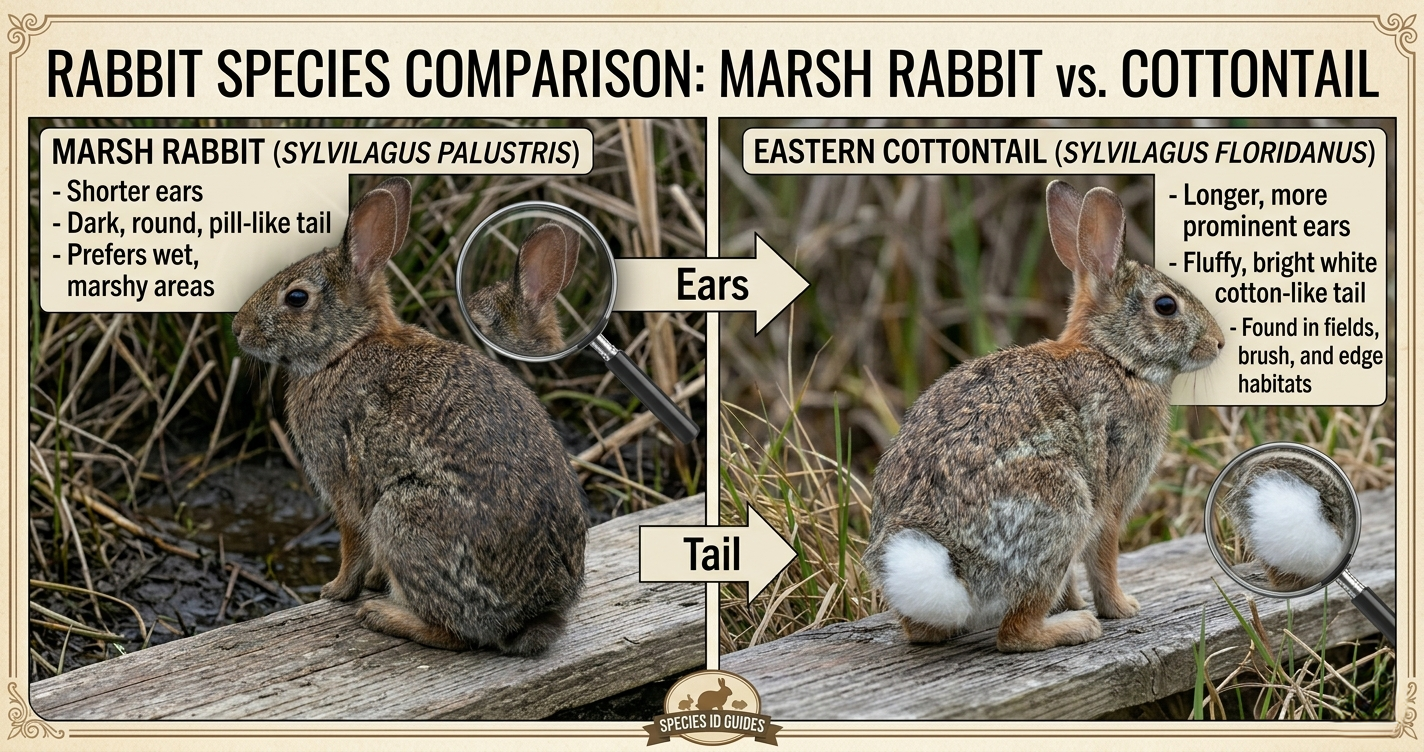
Marsh Rabbit vs. Eastern Cottontail

While the Eastern Cottontail prefers open fields and feeds mainly on upland grasses and clover, the Marsh Rabbit stays close to wetlands, relying heavily on semi-aquatic plants and woody vegetation.
| Feature | Marsh Rabbit | Eastern Cottontail |
| Habitat | Wetlands, swamps, marshes | Fields, forests, suburbs |
| Primary food | Aquatic plants, sedges, grasses | Grasses, clovers, vegetables |
| Foraging zone | Water’s edge, semi ,aquatic | Dry land only |
| Swimming | Strong swimmer | Avoids water |
| Winter diet | Bark, roots, woody stems | Dried grasses, shrubs |
| Crop damage | Sugar cane, sweet potato | Vegetables, clover, tulips |
Frequently Asked Questions
What do marsh rabbits eat in the wild to survive?
In their natural habitats, what do marsh rabbits eat in the wild consists entirely of native vegetation, such as freshwater cattails, duck potato, wild grasses, and seasonal berries. They do not eat non native garden vegetables like carrots or lettuce.
Is the natural diet of a marsh rabbit exclusively plant based?
Yes, they are strict herbivores. Everything what do marsh rabbits eat in the wild is limited to plant matter; they never consume insects, fish, or any other animal proteins.
How do these rabbits stay hydrated in brackish or saltwater environments?
A major part of what do marsh rabbits eat in the wild includes moisture rich aquatic plants that fulfill their hydration needs, allowing them to survive without drinking from open saltwater.
Should humans offer food to wild marsh rabbits?
No. Providing human food disrupts what do marsh rabbits eat in the wild naturally, which can lead to severe digestive issues. It is best to observe them from a safe distance.
How does the changing of seasons affect their foraging choices?
The variety of what do marsh rabbits eat in the wild shifts seasonally, moving from lush, tender grasses in the summer to tougher tree bark and twigs during the winter months.
Do invasive species impact the feeding habits of these wetland rabbits?
Yes, predators like Burmese pythons alter what do marsh rabbits eat in the wild by scaring them away from open water edges, forcing them to feed on less nutritious plants deep inside dense cover.
How do rising sea levels threaten their daily food supply?
Saltwater intrusion destroys freshwater vegetation, drastically reducing what do marsh rabbits eat in the wild and replacing their favorite plants with low nutrient, salt tolerant weeds.
Ecosystem Role
What do marsh rabbits eat in the wild tells us a lot about the health of wetland ecosystems. Their grazing controls dense vegetation and keeps water flow balanced. They are also essential prey for hawks, owls, foxes, bobcats, and cottonmouth snakes.
For pet rabbit herb guidance, read: How Much Cilantro Can a Rabbit Eat.
Conclusion
What do marsh rabbits eat in the wild? Aquatic plants, grasses, berries, bark, roots, and more, shifting with every season. Climate change, saltwater intrusion, and invasive predators are now reshaping their diet in ways that put entire populations at risk. Protecting wetland habitats means protecting the food web these small swimmers depend on to survive.