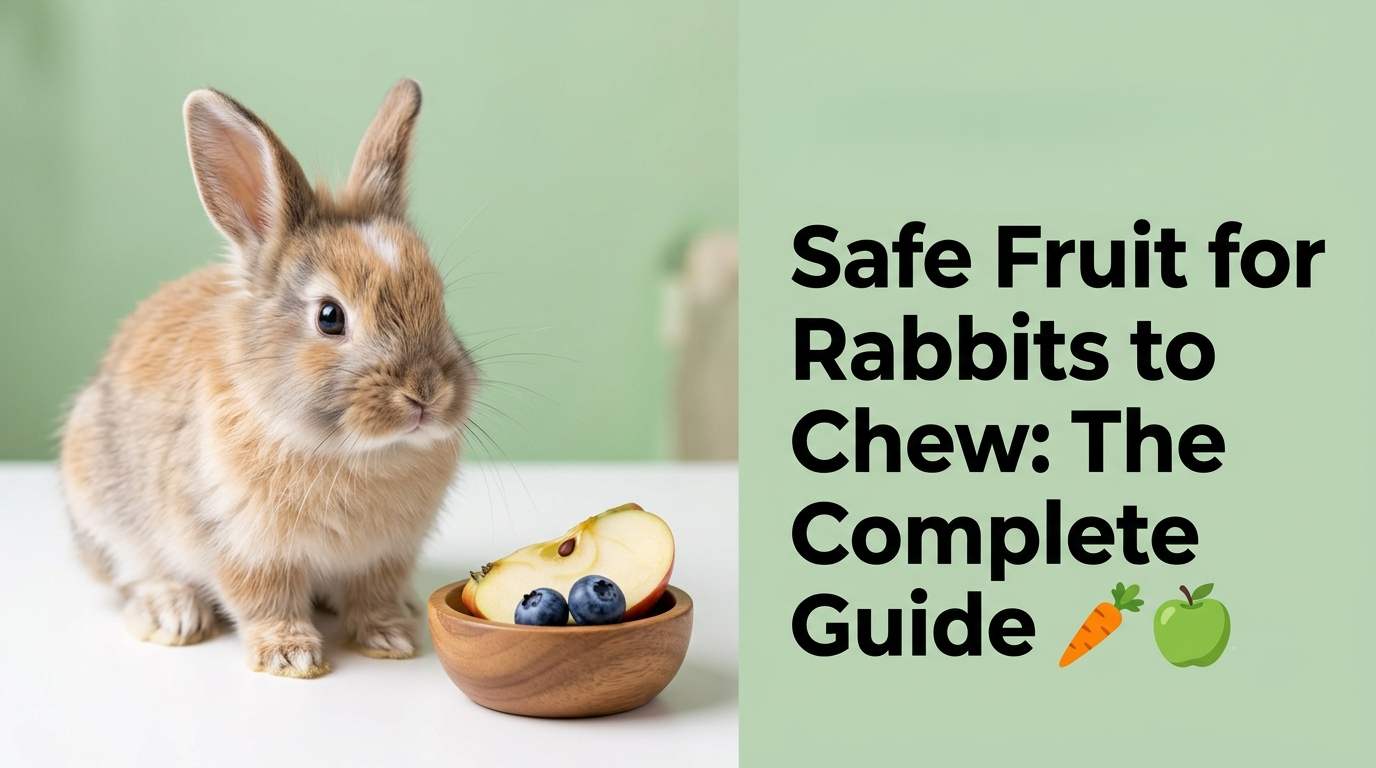
You want to treat your bunny with something sweet. But not every fruit is safe. Some can seriously hurt your rabbit. This guide covers everything you need to know about safe fruit for rabbits to chew.
| Quick AnswerSafe fruits: Apples (no seeds), berries, melon flesh, pears, and peaches (no pit).Serving rule: 1 tbsp per 2 lbs of body weight, 2 to 3 times per week.Age rule: Never give fruit to rabbits under 6 months old.Remember: Hay is the main diet. Fruit is dessert. |
What Safe Fruit for Rabbits to Chew Actually Means

Rabbits cannot chew fruit to grind down their constantly growing, open rooted teeth; soft, sugary fruits actually cause tooth decay if overfed. While safe options like apples, berries, and melons make excellent occasional treats, only high fiber hay and safe wood twigs can properly manage a bunny’s dental health.
| Key Concept | What It Means |
| Open rooted teeth | Rabbit teeth never stop growing |
| Dental wear | Only hay and hard fiber grind teeth down |
| Fruit role | Treat only, not a dental health tool |
| Sugar risk | Too much fruit causes tooth decay and gut problems |
How Much Safe Fruit for Rabbits to Chew Should You Give?

Limit fruit treats strictly to 1 tablespoon per 2 pounds of body weight, given only 2 to 3 times a week. Because a rabbit’s digestive system relies on high fiber hay, excess natural sugars can quickly disrupt their gut health.
What Happens With Too Much Fruit

- Soft cecotropes: Special droppings become soft and sticky
- GI stasis: The gut slows or stops, fatal within 24 to 48 hours
- Obesity: Extra sugar converts to fat, strains joints and heart
- Tooth decay: Fruit sugar feeds bacteria that damage enamel
Always introduce new fruit one at a time. Give a tiny amount first and watch for loose stool over 24 hours.
The Master List of Safe Fruit for Rabbits to Chew


Here is every safe fruit with exact prep steps and serving sizes. Follow these carefully because safe fruits can still become dangerous without proper preparation.
Apples

- Safe parts: Flesh and skin if organic and washed
- Dangerous parts: Seeds and stem contain cyanogenic glycosides
- Serving size: 1 to 2 thin slices for a 4 pound rabbit
- Prep: Wash, slice, remove all seeds and core
Use organic apples when keeping the skin on. Non organic apples carry pesticide residue and wax. Peel them first.
Bananas

- Safe parts: Flesh only
- Serving size: One coin thin slice for a 4 pound rabbit
- Prep: Peel completely, cut one tiny slice
- Warning: Never give a large piece. High sugar disrupts gut bacteria fast
Skip banana peels entirely. US grocery store bananas carry pesticide residue on the peel.
Berries

- Strawberries: Safe including leaves and tops. One medium berry per serving
- Blueberries: Lower in sugar, rich in antioxidants. 2 to 3 berries per serving
- Raspberries: Safe including leaves and stems. 2 to 3 berries per serving
- Blackberries: Safe and tasty. 2 to 3 berries per serving
Berries are the lowest sugar option. Always wash before serving.
Melons

- Watermelon: Red flesh only. Remove all seeds. No rind or green skin. 1 inch cube
- Cantaloupe: Orange flesh only. Remove seeds and rough skin. 1 inch cube
High water content makes melons a good summer treat.
Pears and Peaches

- Pears: Flesh and organic skin are safe. Remove all seeds. 1 thin slice
- Peaches: Flesh only. Remove the pit fully. Thumbnail size piece per serving
Always remove the peach pit completely. It contains high levels of cyanogenic glycosides.
| Fruit | Safe Parts | Dangerous Parts | Serving (4 lb rabbit) |
| Apple | Flesh, skin (organic) | Seeds, stem | 1 to 2 thin slices |
| Banana | Flesh only | Peel | 1 coin thin slice |
| Strawberry | Flesh and tops | None | 1 medium berry |
| Blueberry | Whole berry | None | 2 to 3 berries |
| Raspberry | Flesh and leaves | None | 2 to 3 berries |
| Watermelon | Red flesh | Seeds, rind, skin | 1 inch cube |
| Cantaloupe | Orange flesh | Seeds, skin | 1 inch cube |
| Pear | Flesh, skin (organic) | Seeds | 1 thin slice |
| Peach | Flesh only | Pit | Thumbnail ,size piece |
Which Fruit Skins Are Safe Fruit for Rabbits to Chew?


The answer depends on which fruit and whether it is organic.
Safe Fruit Skins

- Apple skin: Safe if organic and well washed. Higher in fiber than the flesh
- Pear skin: Same as apple. Organic and washed is fine. Non organic should be peeled
- Strawberry tops and raspberry leaves: Safe and high in fiber
Fruit Skins to Avoid

- Banana peel: Not safe. US bananas carry pesticide residue on the peel
- Citrus peels: Too acidic. Causes painful gas and diarrhea
- Mango skin:Avoid mango skin, as it contains urushiol, a natural toxin also found in poison ivy that can cause severe irritation.
- Melon rinds: The pale green and white parts cause digestive upset
Thin, smooth skins from organic produce are usually fine if washed well. Thick peels, rinds, and acidic skins should always stay out of the bowl.
Toxic Fruits That Are Never Safe Fruit for Rabbits to Chew


Some fruits look harmless but can seriously hurt or kill a rabbit.
Avocado

All parts of the avocado contain persin. Persin causes breathing problems and fluid around the heart. There is no safe amount.
Fruit Pits and Seeds

Apple, cherry, apricot, plum, and peach seeds all contain cyanogenic glycosides. These break down into cyanide when chewed. Always de seed and pit fruits completely before feeding them to your bunny.
Grapes and Raisins

Many exotic vets advise avoiding grapes due to potential kidney toxicity. Raisins are just dried grapes, meaning they pack a massive amount of concentrated sugar into a tiny bite.Never recommended.
Citrus Fruits

Oranges, lemons, limes, and grapefruit are too acidic for rabbits. Even a small amount causes painful gas and disrupts gut bacteria.
Dried Fruits

Drying removes water and concentrates sugar to dangerous levels. A raisin has five times the sugar of a fresh grape by weight.
Rhubarb

Rhubarb contains oxalic acid and can cause kidney failure. Never give rhubarb, even in tiny amounts.
| Food | Why It Is Dangerous |
| Avocado | Contains persin, toxic to heart and lungs |
| Apple, cherry, peach seeds | Cyanogenic glycosides release cyanide |
| Grapes and raisins | Potential kidney toxicity |
| Citrus fruits | Too acidic, disrupts gut pH |
| Any dried fruit | Concentrated sugar overwhelms digestion |
| Rhubarb | Contains oxalic acid, causes kidney failure |
Age Matters: When Can Baby Rabbits Have Safe Fruit to Chew?

Baby rabbits under 6 months old should never eat fruit. Young rabbits have unstable gut flora that cannot handle sugar. Fruit before 6 months can cause fatal diarrhea or deadly GI stasis.
Age Guide

- Under 3 months: No fruit. Hay and mother’s milk only
- 3 to 6 months: No fruit. Slowly introduce leafy greens only
- 6 to 12 months: Yes, tiny amounts only, one new fruit at a time
- 1 to 5 years (adult): Yes, following all serving size rules
- 5 years and older (senior): Reduce or eliminate. Digestion slows with age
When you start at 6 months, offer half a teaspoon of one fruit only. Wait 24 to 48 hours. Watch for soft stool or behavior changes before offering more.
| Age | Safe Fruit for Rabbits to Chew? |
| Under 3 months | No. Hay and mother’s milk only |
| 3 to 6 months | No. Leafy greens only |
| 6 to 12 months | Yes, tiny amounts, one new fruit at a time |
| 1 to 5 years (adult) | Yes, following all serving size rules |
| 5 years+ (senior) | Reduce or eliminate. Digestion slows |
Real Safe Fruit for Rabbits to Chew: Fruit Tree Woods


This is what most guides miss completely. If your rabbit needs to chew for dental health, give them fruit tree branches, not the fruit. Hard apple twigs grind teeth naturally, add fiber, and carry zero sugar.
Safe Fruit Woods

- Apple tree twigs: Best choice. Hard, slightly sweet. Buy organic bundles from pet stores
- Pear tree branches: Safe and similar to apple wood. Cut fresh from an unsprayed tree
- Blackberry and raspberry canes: Safe including leaves. Remove very sharp thorns if needed
- Willow branches: Very popular. Willow twig balls are sold in most pet stores
Toxic Fruit Woods to Avoid

- Cherry tree wood (fresh): Toxic. Contains cyanogenic compounds
- Peach tree wood (fresh): Toxic. The wood is not safe even though the flesh is
- Plum tree wood (fresh): Toxic. Same risk as cherry and peach
- Apricot tree wood (fresh): Toxic. Avoid completely
- Cedar: Toxic. Phenols damage the liver even through inhalation
- Painted or varnished wood: Never offer. Chemicals cause poisoning
Only give wood you can identify with confidence. Make sure it has never been sprayed, stained, or treated.
| Wood Type | Safe for Rabbits? |
| Apple tree twigs | Yes, excellent choice |
| Pear tree branches | Yes, very popular |
| Blackberry or raspberry canes | Yes, leaves also safe |
| Willow branches | Yes, widely sold in stores |
| Cherry tree wood (fresh) | No, toxic |
| Peach tree wood (fresh) | No, toxic |
| Plum tree wood (fresh) | No, toxic |
| Apricot tree wood (fresh) | No, toxic |
| Cedar | No, causes liver damage |
| Painted or varnished wood | Never, toxic chemicals |
Signs Your Rabbit Ate Too Much Safe Fruit to Chew

Watch for these signs in the 12 to 24 hours after giving fruit.
Early Warning Signs

- Soft or liquid droppings: Earliest sign of too much sugar
- Reduced appetite: Ignoring hay is a red flag
- Lethargy: Unusual stillness or reluctance to move
Serious Warning Signs

- No droppings at all: Suggests GI stasis. Act immediately
- Hunched posture or teeth grinding: Signs of abdominal pain
- Bloated or hard belly: Gas buildup from gut disruption
For soft droppings only, remove all fruit and offer unlimited hay. Droppings usually return to normal within 24 hours. If your rabbit stops eating or has a hard belly, see a vet immediately. GI stasis is fatal within 24 to 48 hours.
For more rabbit care guidance, visit: How Long Do Flemish Giant Rabbits Live? The Complete Lifespan Guide
Building a Healthy Diet Around Safe Fruit for Rabbits to Chew

Fruit should make up no more than 5% of your rabbit’s total diet. Here is how a healthy adult rabbit diet breaks down.
The 4 Part Rabbit Diet

- 80 to 85% Hay: Timothy or orchard grass. Available 24 hours a day. Most important food
- 10 to 15% Leafy Greens: Romaine, cilantro, parsley, arugula. 1 cup per 2 lbs daily
- 5% Pellets: Timothy based pellets. Quarter cup per 6 lbs daily. Do not overfeed
- Less than 5% Fruit Treats: Safe fruit for rabbits to chew. Occasional rewards only
| Diet Component | Percentage | Examples |
| Grass hay | 80 to 85% | Timothy, orchard grass, meadow hay |
| Leafy greens | 10 to 15% | Romaine, cilantro, parsley, dandelion |
| Pellets | About 5% | Timothy based pellets only |
| Fruit treats | Under 5% | Apple, berries, melon (all rules applied) |
Hay is the main course. Fruit is always dessert.
Frequently Asked Questions About Safe Fruit for Rabbits to Chew
1. What is the safest fruit for rabbits to chew as a first treat?
Blueberries are the best starting point. They are small and lower in sugar than most fruits. Start with just one blueberry. Wait 24 hours before offering more.
2. Can rabbits eat apple sticks and apple flesh on the same day?
Yes, but count both toward daily fruit intake. Apple sticks are the better daily option because they carry no sugar at all.
3. Is dried fruit safe for rabbits to chew?
No. Drying concentrates sugar to dangerous levels. Always choose fresh fruit only.
4. My rabbit grabbed a grape from the table. What should I do?
Watch them closely for 24 hours. Look for soft droppings or lethargy.Feeding your bunny a single grape is generally safe and won’t cause severe issues.. Keep all grapes out of reach going forward.
5. Can I give safe fruit for rabbits to chew every day?
No. Give fruit 2 to 3 times per week only. Daily fruit adds up to excess sugar even in small amounts.
Final Thoughts on Safe Fruit for Rabbits to Chew
Strictly limit safe fruits like blueberries, raspberries, apple slices, or melon flesh to 1 tablespoon per 2 lbs of body weight, 2 to 3 times weekly, for adult rabbits only (6+ months), ensuring all seeds and pits are removed. For actual dental chewing, bypass the sugary fruit entirely and offer organic apple, pear, or willow branches instead.
Keep the hay bowl full at all times. Hay is the foundation of rabbit health. For more rabbit care guides, visit rabbitaura.com.