
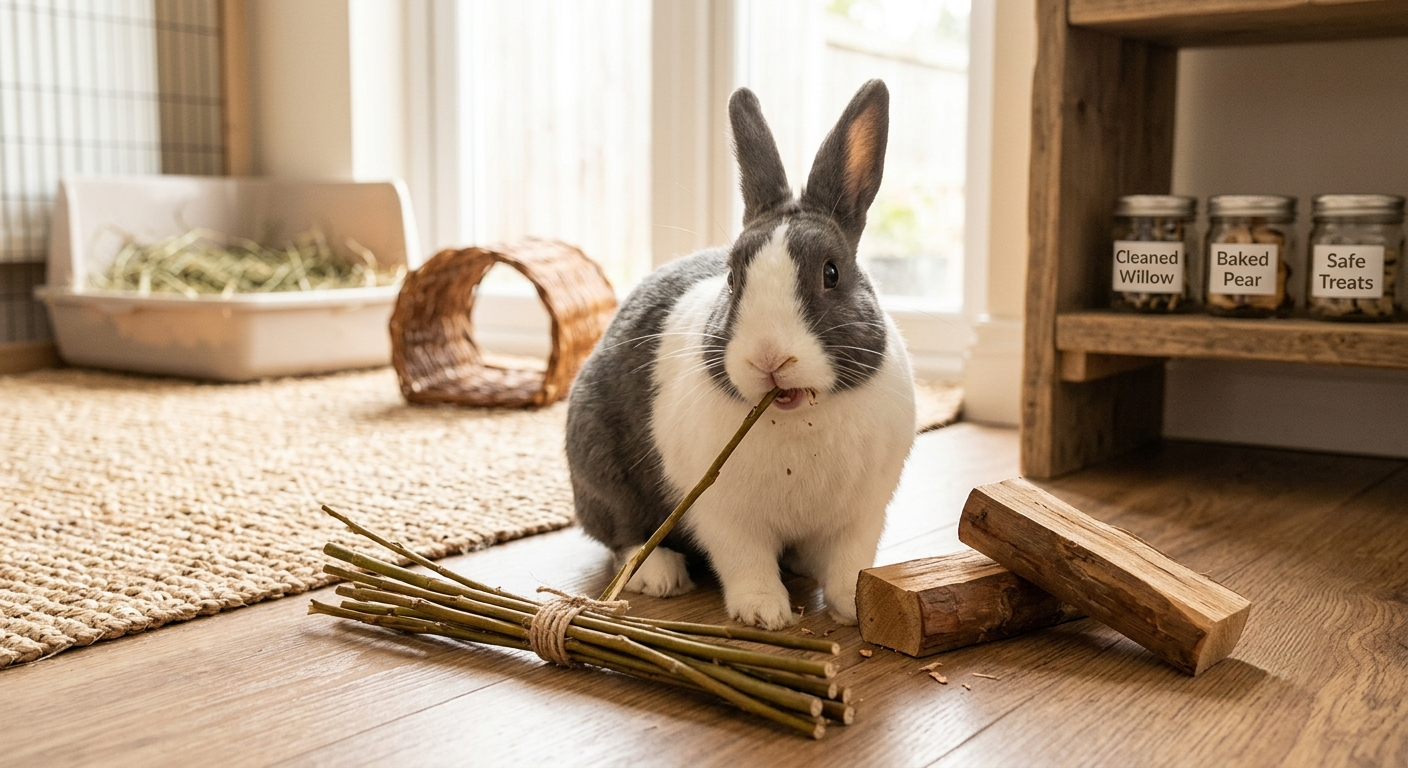
Safe Woods & Chewing Guide
You wake up to the sound of determined gnawing. Your rabbit has found the corner of your baseboard again. If you’re frantically searching “can bunnies chew on pear and willow wood,” you’re in exactly the right place.
Qwick Answer: Yes. Both pear wood and willow wood are not only safe for rabbits, they’re among the best chewing materials you can offer.However, before you harvest branches from your yard, it is critical to understand how to source and prepare them safely to protect your rabbit’s health.
Why Do Rabbits Chew Everything in Sight?

Rabbits chew everything because their teeth grow continuously throughout their lives, and chewing helps wear them down to a safe length. It is also a natural way for them to explore their environment and relieve boredom.
The Biology Behind the Behavior

Because chewing is a biological requirement rather than a bad habit, owners often ask, can bunnies chew on pear and willow wood? This is crucial because rabbits have open rooted teeth that never stop growing (up to 3 to 5 mm per week), and without constant wear from safe woods, those teeth can overgrow, curve, and create painful spurs that dig into the tongue and cheeks
Beyond dental health, chewing is also one of the primary ways rabbits explore their environment and relieve boredom. A rabbit without enough mental stimulation will redirect that energy onto your furniture, cables, and walls.
When chewing suddenly changes, pay attention. A rabbit that abruptly stops chewing or starts drooling, dropping food, or grinding its teeth may be experiencing dental pain, molar spurs, or early GI stasis. These warrant a vet visit, not just a new chew toy.
Can Bunnies Chew on Willow Wood? A Deep Dive

When rabbit owners ask whether willow is safe, it’s often the first wood that comes to mind and for good reason. If you are wondering can bunnies chew on pear and willow wood, both are excellent, non-toxic choices that help keep a rabbit’s continuously growing teeth worn down
Why Willow Is an Industry Favourite

Willow is completely non-toxic to rabbits, so if you are researching can bunnies chew on pear and willow wood, it is one of the most widely recommended chewing materials by exotic vets. Its naturally pliable texture makes it satisfying to tear apart, and the fibrous strands provide excellent dental abrasion.
Common willow products you’ll find:
- Woven willow balls
- Willow tunnels and hideouts
- Loose willow sticks and twigs
- Willow baskets (unfastened, no metal staples)
Can Rabbits Chew Fresh Willow from the Garden?

Yes, with one important condition. If you are wondering can bunnies chew on pear and willow wood, fresh willow branches from your yard are safe only if the tree has never been treated with pesticides, herbicides, or fertilizers. Roadside willows or those near treated lawns should always be avoided, so if you’re unsure, skip fresh and go with commercially dried products instead.
Can Bunnies Chew on Pear Wood? A Deep Dive

So what about pear specifically, is it equally safe? Absolutely. Pear wood is a safe pome fruit wood, placing it in the same category as apple wood, which has long been a rabbit staple.
Why Pear Wood Is Different from Toxic Stone Fruits

This is where many rabbit owners get confused when wondering, can bunnies chew on pear and willow wood? Pear (a pome fruit) is perfectly safe. Conversely, cherry, peach, plum, and apricot (stone fruits) are toxic because stone fruit woods contain cyanogenic glycosides compounds that can release cyanide when metabolized. Always double-check the category before offering any fruit tree wood.
Fresh vs. Dried Pear Wood

Fresh pear wood contains sticky sap and higher resin content, which can cause mild digestive upset. Dried pear wood is always the better choice. Let freshly cut branches air dry for several weeks before offering them to your rabbit. The density of dried pear wood makes it ideal for stubborn, heavy chewers who demolish softer woods within minutes.
The Missing Step: How to Prepare Wild Pear & Willow Wood Safely

This is where most rabbit care guides fall short when answering, can bunnies chew on pear and willow wood? Even if the wood type is safe, sourcing it from outside means you need a proper preparation protocol. Skipping this step is how parasites, fungal spores, and chemical residues end up in your rabbit’s enclosure
⚠️ WARNING: Never use wood from trees that have been sprayed with pesticides, herbicides, or chemical fertilizers even once. These chemicals bind to wood fibers and cannot be washed away.
Step by Step Preparation Guide

Organize and Plan: If you are researching can bunnies chew on pear and willow wood, break down the preparation process into clear, sequential steps and gather all necessary safe materials before you begin.
Execute and Review: Follow each step carefully in order, and review your progress at the end to ensure the wood is clean and safe for your rabbit.
Step 1 Identify and Inspect

Confirm the tree species before cutting. Look for signs of mold, black spots, insect infestation, or unusual growths. Discard anything that looks diseased.
Step 2 Wash Thoroughly

Even after confirming can bunnies chew on pear and willow wood, you must clean it properly. Scrub the wood under running water using a stiff brush to remove dirt, moss, bird droppings, and debris. Do not use soap, bleach, or any household cleaners, as residues can linger in porous wood.
Step 3 Sterilize by Baking

Place the cleaned wood on a baking tray and bake at 200°F to 250°F (93°C to 121°C) for 1 to 2 hours. This kills parasites, fungal spores, and insect eggs without scorching the wood. For small twigs, a brief boil followed by oven drying also works.
Step 4 Cool and Store

Allow the wood to cool completely before giving it to your rabbit. Once you know can bunnies chew on pear and willow wood safely, remember to store any unused pieces in a dry, well-ventilated container, as damp storage encourages mold growth
Safe vs. Toxic Woods: A Complete Reference Guide

Here’s everything you need to know about safe and toxic wood options, laid out clearly for quick reference:
| ✅ Safe Woods | ❌ Toxic Woods |
|---|---|
| Pear | Cherry |
| Willow | Peach |
| Apple | Plum |
| Kiln dried Aspen | Apricot |
| Birch | Yew |
| Balsa | Fresh Cedar |
| Maple | Fresh Pine |
| Plywood / MDF / Treated Wood |
Why Fresh Pine and Cedar Are Dangerous

Fresh pine and cedar contain phenols, aromatic compounds that are toxic to rabbits when ingested or even inhaled in quantity. When asking can bunnies chew on pear and willow wood, it is clear that these alternatives are much safer; kiln dried pine is considered borderline safe by some vets, but it’s best avoided when pear and willow are so readily available.
The Hidden Danger: Treated and Varnished Wood

Even if the base wood is technically safe, any wood that has been painted, varnished, stained, or pressure treated is dangerous. The chemicals used in furniture finishes and wood preservatives are highly toxic to rabbits. This includes most commercially sold hutches and cages with painted surfaces; never let your rabbit chew on the frame itself.
Frequently Asked Questions
What should I do if my rabbit actually swallows wood instead of spitting it out?
Small amounts of chewed wood fiber pass through a rabbit’s digestive system harmlessly. However, if your rabbit swallows a large chunk, monitor closely for signs of GI stasis: hunched posture, no droppings, loss of appetite, or a bloated abdomen. Keep hay intake high (hay should make up 80% of the diet) as fiber helps move blockages. Contact your vet immediately if you see stasis symptoms.
Is plywood or MDF safe for rabbits to chew?
No. Plywood and MDF are bonded with formaldehyde based adhesives and chemical resins that are toxic to rabbits. Never use these as chew materials or as the interior surface of a rabbit enclosure.
How do I stop my rabbit from chewing on household furniture?
Redirection is the most effective strategy. The moment you find your rabbit at the baseboards, offer a willow stick or pear wood branch instead. Over time, rabbits learn to seek out the approved items. Pair this with physical barriers (cable protectors, corner guards) and ensure your rabbit has multiple approved chew options in their enclosure at all times.
How often should I introduce new pear or willow sticks?
Replace chewed down sticks every few days, or whenever they become small enough to pose a swallowing risk. Rotate between pear, willow, apple, and other safe woods to keep things interesting. Rabbits, like people, appreciate variety.
The Bottom Line
Can bunnies chew on pear and willow wood? Not only can they, they should. These two woods are among the safest, most beneficial, and most veterinarian recommended chewing materials available for domestic rabbits.
Willow offers a softer, pliable texture that’s perfect for light to moderate chewers who love to shred and pull fibers apart. Pear wood is dense and long lasting, ideal for heavy chewers who destroy everything in minutes. Used together, they keep teeth worn down naturally, provide critical mental stimulation, and give your rabbit a healthy outlet for one of their most deeply wired instincts.
Just remember: source carefully, prepare properly, and when in doubt, stick to commercially prepared products from reputable pet suppliers.
For more on what fruits and plant materials are safe for your rabbit, check out this helpful guide on safe fruit for rabbits to chew.
Always consult a rabbit savvy exotic vet for personalised health and dietary advice for your bunny.