Here is the qwick way to know What Do Rabbits Like to Eat?
Editor’s Note: Proper nutrition is the single most important factor in a rabbit’s lifespan, yet it is often the most misunderstood. This guide has been fully revised for May 2026 to include the latest veterinary recommendations on GI stasis prevention, foraging enrichment, and updated safety lists for common household vegetables. Whether you are a new bunny parent or a long time owner, this breakdown ensures your rabbit’s diet is as nature intended.
| Quick Answer:Rabbits need 80% hay, 15% fresh greens, and 5% pellets every day.Timothy hay is the best daily choice for adult rabbits in the USA.Fresh clean water must always be available.Never feed sugary foods, iceberg lettuce, bread, or processed items. |
You love your bunny. But loving a rabbit and feeding one correctly are two very different things. Many caring owners give their pets the wrong foods by mistake. Those small daily errors can slowly lead to serious health problems. The good news is simple. Once you know what a rabbit naturally needs, feeding them becomes easy and fun. Rabbits are herbivores. In the wild, they spend hours chewing grass, hay, and leafy plants. Their digestive system is built for one thing only: high-fiber food that keeps their gut moving all the time. When that movement slows down, a deadly condition called GI Stasis can develop fast. This guide covers everything you need to knowFrom the food pyramid to age-specific meals, safe treats, and dangerous foods to avoid.
The 80/20 Rule: Understanding the Rabbit Food Pyramid

Think of your rabbit’s diet as a pyramid with three layers. The bottom layer is the biggest. It takes up 80% of the diet. That layer is hay.The middle layer is about 15%. It is made up of fresh leafy greens and vegetables. The tiny top layer is just 5%. It includes pellets and occasional treats. This breakdown comes from rabbit vets and nutrition experts across the USA. Many new owners flip this pyramid by mistake. They give lots of pellets and treats but very little hay. This is one of the most harmful feeding mistakes a rabbit owner can make. Without enough hay, a rabbit’s teeth grow too long. Their gut slows down and they gain unhealthy weight over time. Hay is not just food. It is medicine.
The Foundation: Why High-Fiber Hay is Non-Negotiable

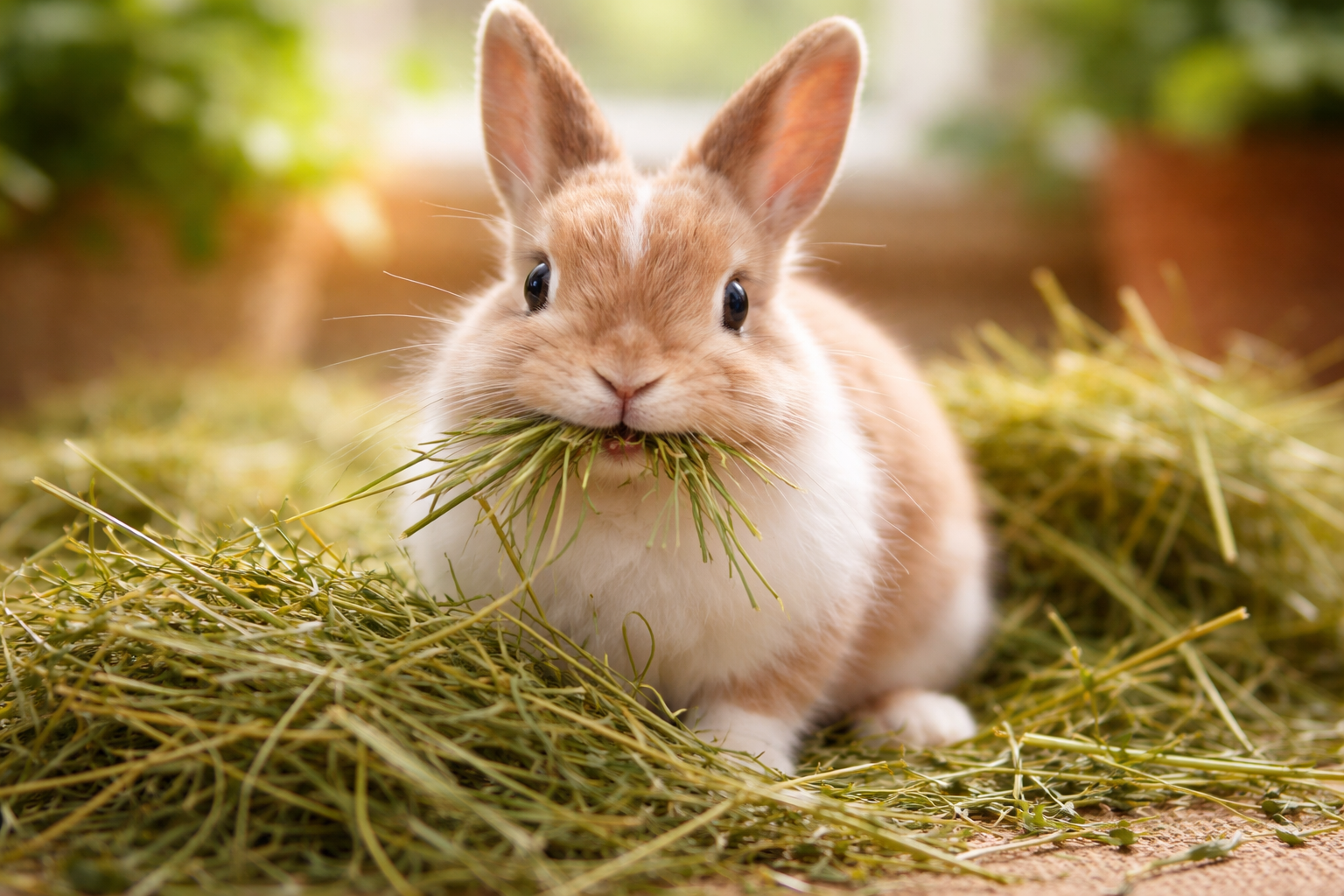
Hay must be available to your rabbit 24 hours a day, 7 days a week. It is not a snack. It is the main meal, every single day. Hay does three critical jobs inside a rabbit’s body. First, it keeps the digestive system moving at the right pace. Second, it naturally wears down teeth that never stop growing. Third, it keeps rabbits busy. They love to chew, sort, and dig through fresh hay.A rabbit without hay, even for a few hours, is a rabbit at serious risk.
Timothy Hay vs. Orchard Grass vs. Alfalfa
Timothy Hay is the gold standard for adult rabbits in the USA. It has the perfect balance of fiber, protein, and calcium. Most American vets recommend it as the number one daily hay choice. Orchard Grass is a great alternative for picky eaters. It is softer and slightly sweeter in smell. Many rabbits love it even more than Timothy. You can also mix both hays together to add variety.Alfalfa hay is a completely different story. It is high in calcium and protein, which makes it ideal for baby rabbits under 7 months old. But it is far too rich for adult rabbits. Feeding alfalfa to a grown rabbit regularly can cause kidney damage and bladder problems.
Simple rule: Under 7 months = Alfalfa hay. Over 7 months = Timothy or Orchard Grass.
The Daily Salad Bar: Safe Leafy Greens for Bunnies

Once your rabbit is older than 12 weeks, fresh greens can be added daily. Greens provide important vitamins, minerals, and hydration that hay alone cannot give.A good daily serving for a 6-pound rabbit is about one packed cup of mixed greens. Larger rabbits can have a little more. Smaller breeds should get a little less. Always wash greens well before serving, even if the package says pre-washed. Pesticide residue is a real danger for small animals like rabbits. Choose organic produce whenever you can. Introduce new greens slowly, one at a time, and watch for soft stools or stomach upset.
The Three-Green Rotation Rule
The best approach is to offer three different greens each day. This gives your rabbit a mix of nutrients and keeps mealtime interesting. Here are the safest and most popular greens for USA rabbit owners:
- Romaine lettuce: a great base green with high water content
- Cilantro: most rabbits absolutely love the taste and smell
- Bok choy: rich in calcium and essential vitamins
- Arugula: slightly peppery but very nutritious
- Basil: fragrant, flavorful, and completely safe
- Dill: both the stems and leaves are safe to feed
- Parsley: use in smaller amounts due to high calcium levels
- Kale: offer only a little bit, as too much causes digestive issues
High-Quality Pellets: Nutrient Boost or Sugar Trap?

Pellets have a confusing reputation in the rabbit owner community. Some people treat them as the main food. Others avoid them completely. Finding the right balance is the key to a healthy rabbit. Good pellets provide vitamins and minerals that fill gaps in a hay-and-greens diet. But they must be given in the right amount. For an adult rabbit, give about one quarter cup per 5 pounds of body weight per day. That is all. Pellets are a small supplement, not a main meal.When buying pellets, read the label carefully. Choose plain green pellets made mostly from timothy grass. Avoid colorful mixes with dried fruit, seeds, or corn pieces. Those colorful bits are packed with sugar and are harmful to teeth and digestion.
Warning: If the bag lists corn, sunflower seeds, or artificial colors, do not buy it.
Healthy Treats: What Fruits Can Rabbits Safely Eat?

Fruit is the candy of the rabbit world. A little goes a long way. Too much causes real harm.Give no more than one to two teaspoons of fruit per day. Offer it no more than two or three times per week.Think of fruit as a special reward, not a daily food. Safe options include blueberries, strawberries, and raspberries. Apple slices are fine but always remove the seeds. Apple seeds contain a natural toxin. A thin slice of banana, a small cube of seedless watermelon, or a few grapes also work well. Never give canned or dried fruit. The sugar concentration is far too high for rabbits.
Why the Bugs Bunny Carrot Myth is Dangerous
Cartoons have misled rabbit owners for decades. Most people believe carrots are a rabbit’s favorite daily food. They are not. Carrots are root vegetables full of natural sugar. They are not poisonous, but eating them daily leads to obesity and tooth decay. A small carrot slice once or twice a week is perfectly fine as a treat. But a rabbit living on daily carrots with little hay will develop health problems over time.
Critical Hydration: Bowls vs. Bottles

Water is just as important as food. Both bowls and bottles work for rabbits, but most vets slightly prefer ceramic bowls. Rabbits drink more when water is easy to reach. Bottles require more effort and sometimes clog, causing a rabbit to drink less. A rabbit needs 50 to 150 milliliters of water per kilogram of body weight each day.A dehydrated rabbit eats less hay. Less hay slows the gut. A slow gut causes GI Stasis. It is a dangerous chain, and it starts with not enough water. Clean your water bowl daily to prevent bacteria buildup. If using a bottle, check the nozzle every day to confirm it flows properly.
Age-Specific Feeding: From Kits (Babies) to Senior Rabbits

A baby rabbit and a senior rabbit have very different nutritional needs. Understanding this can greatly improve your pet’s long-term health.
Kits (Under 7 Months): Baby rabbits need their mother’s milk for the first three to four weeks. After weaning, alfalfa hay becomes the main food. Babies need extra protein and calcium to grow strong bones. Alfalfa-based pellets can be offered freely at this stage. Fresh greens can be slowly introduced after 12 weeks of age.
Adult Rabbits (7 Months to 5 Years): This is when the full 80/15/5 diet applies. Switch from alfalfa to Timothy or Orchard Grass hay right away. Keep pellets to the quarter-cup daily guideline. Offer a rotating variety of fresh greens every day.
Senior Rabbits (6 Years and Older): Older rabbits lose weight more easily and may struggle to chew. Keep unlimited hay available at all times. If chewing is hard, switch to softer Orchard Grass. Some seniors need slightly more pellets to maintain a healthy weight. Regular vet visits become especially important at this life stage.
Mental Health and Foraging: Making Mealtime Fun

Most owners think carefully about what their rabbit eats. Very few think about how their rabbit eats.This gap in care affects both physical and mental health. In the wild, rabbits spend hours foraging every day. They sniff, dig, and search for their food. This keeps their brain active and sharp. A pet rabbit eating from a bowl gets none of that natural stimulation. A bored rabbit chews furniture, thumps loudly, and shows signs of stress. Here are simple ways to bring foraging into daily life:
- Scatter hay around the enclosure so your rabbit has to search for it
- Use a seagrass foraging mat with hay and herbs hidden inside
- Hide one blueberry or a basil leaf under a pile of hay for your rabbit to find
- Rotate which greens you offer each day so every meal feels new
- Stuff empty cardboard paper towel tubes with hay as a free foraging toy
These changes take almost no extra time from your day. But they make an enormous difference in your rabbit’s daily happiness. A rabbit that stays mentally engaged lives a longer and happier life.
Forbidden Foods: What to Never Feed Your Rabbit
Some foods that seem harmless to humans are dangerous for rabbits. Some are even life-threatening in small amounts. This is one of the most important sections of this entire guide. Never feed your rabbit any of the following:
- Chocolate: contains theobromine, which is toxic to rabbits
- Avocado: all parts of the plant are highly poisonous to rabbits
- Iceberg lettuce: contains lactucarium, which causes digestive harm and diarrhea
- Onions and garlic: damage red blood cells and cause anemia
- Bread, crackers, pasta: upset gut bacteria extremely fast
- Cereal and granola: far too sugary for a rabbit’s system
- Rhubarb: the leaves especially are highly poisonous
- Potatoes and raw beans: starchy and very harmful to digestion
- Dairy products: rabbits are completely lactose intolerant
- Any food with added sugar, salt, or preservatives
When you are unsure about a food, follow one simple rule. When in doubt, leave it out.
Monitoring Health: What Your Rabbit’s Droppings Tell You

Checking your rabbit’s droppings every day is one of the most powerful health tools you have. It sounds simple, but it can save your rabbit’s life. Rabbits produce two kinds of droppings, and both tell you something important. The first type is small, round, and dry. They should be pea-sized and medium brown in color. The second type is called cecotropes. These are softer, grape-like clusters. Rabbits eat cecotropes directly from their own bodies. This is completely normal. It is how they absorb extra nutrients from their food. Watch for these warning signs every day:
- Very small or misshapen droppings: rabbit is not eating enough hay
- Droppings strung together with hair: rabbit needs more brushing
- Liquid or very soft droppings: may signal infection, stress, or too many greens
- No droppings at all: this is a medical emergency
If your rabbit stops eating and stops making droppings for 12 hours or more, act immediately. This is a sign of GI Stasis. GI Stasis can be fatal within 24 to 48 hours without a vet. Do not search for home remedies. Call your rabbit vet right away.
Conclusion: The Signs of a Well-Fed, Happy Bunny
A rabbit eating right is a joy to be around. Their energy is bright and steady. Their coat is smooth and shiny. Their eyes are clear and curious. Their litter box shows healthy droppings every day. These are the signs you are doing everything right. Getting there is not hard. Keep unlimited hay available. Rotate fresh greens daily. Keep pellets to a small daily supplement. Offer fruit only as a rare treat. Make sure fresh water is refilled and placed where your rabbit can reach it easily. The biggest change most rabbit owners need to make is trusting hay. Plain, simple hay does more for a rabbit’s health than any vitamin or expensive brand ever could. What is your bunny’s favorite snack? Drop a comment below and share it with the rabbit community. If this guide helped you today, please pass it on to another rabbit lover.
Frequently Asked Questions (FAQs)
Q1: Can rabbits eat bread?
No. Never give bread to a rabbit. It is a processed carb that seriously disrupts the gut bacteria balance. Even a small piece can cause painful gas, bloating, and diarrhea. This applies to crackers, toast, and all other baked goods too.
Q2: How many pellets should I give my rabbit per day?
Give about one quarter cup of timothy-based pellets per 5 pounds of body weight. Offer this once daily. A 10-pound rabbit gets roughly half a cup per day.Check the bag label and ask your vet if your rabbit has any health conditions.
Q3: Are strawberries safe for rabbits?
Yes, strawberries are safe in small amounts. Give one or two small slices a couple of times per week. Always remove the green stem before serving. Do not feed strawberries every day as the natural sugar adds up quickly.
Q4: Can rabbits eat bananas?
Bananas are safe but very high in sugar. A piece the size of your thumbnail, once or twice a week, is enough. Never offer a whole banana or make it a daily habit.
Q5: How do I know if my rabbit is eating enough?
Look at the litter box every day. Consistent pea-sized droppings mean the gut is working well. A steady healthy weight and a shiny coat are also strong signs of good nutrition. A well-fed rabbit is active and alert during early morning and evening hours. If your rabbit is hunched, grinding teeth, or ignoring food for more than a few hours, call a vet.
What’s New in This 2026 Update:
In our latest revision, we have expanded our “Forbidden Foods” list to address common household items that are often mistakenly thought to be safe. We have also added a critical new section on Mental Health and Foraging, recognizing that how a rabbit eats is just as vital as what it eats. Finally, we’ve refined our “ThreeGreen Rotation” guidelines to help owners better balance calcium and oxalic acid levels in daily salads, ensuring longterm kidney health for your pets.
Author’s Note
About the Author: ZIB
ZIB is a dedicated rabbit welfare advocate and pet nutrition enthusiast with a passion for helping small animals thrive. With years of experience in rabbit care and a deep commitment to evidence based feeding practices, ZIB focuses on bridging the gap between clinical veterinary advice and the daily reality of pet ownership. Through clear, actionable guides, ZIB aims to ensure that every “house bun” lives a life full of health, hay, and happiness