
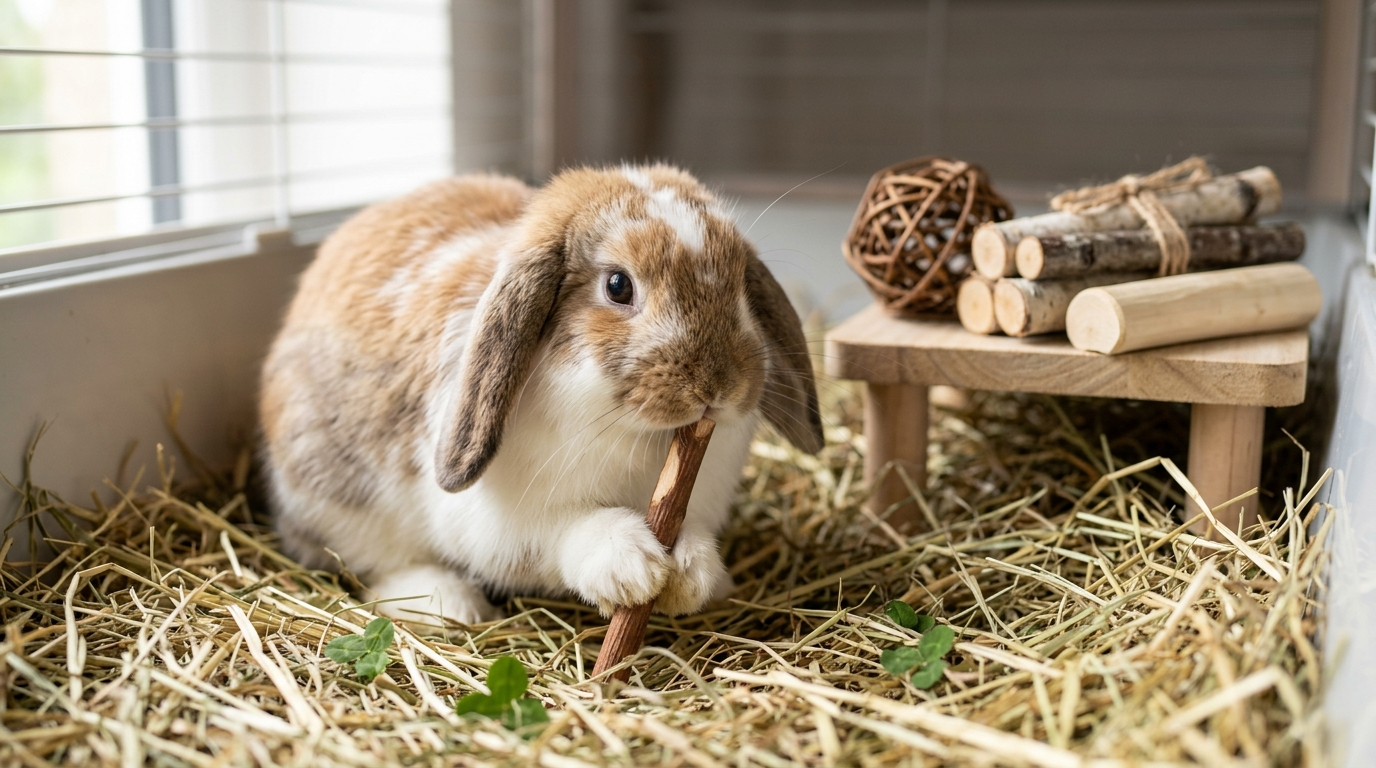
| Quick AnswerWhat wood can rabbits chew?Rabbits can safely chew apple and willow, birch, pear, poplar, and kiln dried aspen. Never give cherry, oak, walnut, or any treated wood. Always clean and oven-bake backyard sticks before offering them. |
| Key Takeaways Rabbit teeth grow 2 to 4 mm every week chewing is a health necessity.Fruit woods like apple are the safest choice for most rabbits.Fresh pine is dangerous; only kiln dried pine is acceptable.Backyard sticks need cleaning and oven-baking before use.Soaking sticks in apple juice can make reluctant chewers interested. |
Why Do Rabbits Need to Chew?

A rabbit’s teeth never stop growing they extend 2 to 4 mm every single week. Without proper wear, teeth develop sharp spurs that cut into the tongue and cause painful malocclusion. Understanding what wood can rabbits chew is not just about fun it directly protects their dental health. Chewing also reduces boredom and prevents destructive habits like gnawing on furniture and baseboards. A rabbit with the right chew toys is a calmer, happier rabbit
Safe Woods for Rabbits The Master List

When choosing what wood can rabbits chew, always start with these proven safe categories.
| Fruit WoodsApple The gold standard natural sweetness makes it the most accepted by rabbits. | Fruit WoodsPear Similar to apple; ensure no pesticide residue before offering. | Shrubs Blueberry / Blackberry Thorns on blackberry canes should be removed first |
| Native TreesWillow Highly popular; white, pussy, and weeping willow are all safe. | Native TreesBirch A firm hardwood that lasts a long time as a chew toy. | Native TreesPoplar / Cottonwood Soft texture makes it easy for smaller or older rabbits to chew. |
| Hardwoods Maple (Sugar/Silver) Only sugar or silver maple red maple is not safe for rabbits. | Hardwoods Kiln dried Aspen Must be kiln dried; fresh aspen may contain oils that irritate the gut. | Garden Rose Bush / Raspberry Remove all thorns from rose stems; raspberry canes are fine as is. |
The Pine & Cedar Debate

Many rabbit owners wonder what wood can rabbits chew from the softwood family. The answer depends entirely on preparation.
Kiln Dried Pine Safe The heat process drives out aromatic phenols. Kiln-dried pine from a pet store is an acceptable choice for most rabbits. | Fresh Pine Avoid Natural phenols in fresh pine stress the rabbit liver over time. Never give sticks cut directly from a living pine tree. |
Cedar carries the same risk and should be avoided entirely even kiln dried cedar retains enough aromatic oils to be a concern.
Toxic Woods Never Give These

Knowing what wood can rabbits chew safely also means knowing what to keep away entirely.
| Never Give These Woods Cherry, Peach, Plum All stone fruit woods contain cyanogenic glycosides that release cyanide when chewed. Oak High tannin content damages the digestive system and liver. Walnut Juglone compounds are toxic to small mammals. Elderberry Contains sambunigrin, a toxic glycoside. Yew Highly toxic; even a small amount can be fatal. Pressure treated wood Chemical preservatives are deadly. Plywood / MDF / Painted wood Toxic glues, formaldehyde, and paint compounds. |
How to Prepare Backyard Wood Step by Step

Most guides answer what wood can rabbits chew but skip the preparation. Here is exactly how to make backyard sticks safe.
- Identify the tree correctly confirm the species is on the safe list before you cut anything.
- Check for pesticides avoid any tree within 50 feet of treated lawn areas or near agricultural land. When in doubt, skip it.
- Remove bark and moss scrub the stick under running water with a stiff brush to remove lichens, moss, and surface dirt.
- Rinse thoroughly a second rinse with clean water removes loosened debris.
- Oven-bake to kill parasites place sticks on a baking sheet and bake at 95 °C (200 °F) for 30-60 minutes. This kills eggs, mites, and bacteria without burning the wood.
- Cool completely before giving to your rabbit hot wood can cause mouth burns
My Rabbit Won’t Chew His Sticks Troubleshooting

Even when you know what wood can rabbits chew, some rabbits still ignore their toys. Here is what works.
Apple Juice Soak Trick

Soak cleaned sticks in 100% pure apple juice (no added sugar) for 20 to 30 minutes. Let them dry fully on a rack. The faint scent and residue make the stick far more interesting to reluctant chewers.
DIY Chew Kebab

Thread several short sticks, a cardboard tube, and a hay cube onto a piece of natural jute twine. Hang it inside the enclosure at nose height. Movement triggers natural curiosity.
Location Matters

Place chew toys near the spots where your rabbit already chews baseboards, cage corners, litter box edges. Rabbits are creatures of habit. Meeting them where they already chew redirects the behavior effectively.
Common Household Items Safe or Not?

Beyond knowing what wood can rabbits chew, these everyday items come up frequently.
| Safe Plain Cardboard Non glossy, no staples, no tape plain corrugated cardboard is fine. | Safe Wicker / Seagrass Natural, unvarnished wicker baskets and mats are rabbit-safe. | Safe Toilet Paper Rolls Plain cardboard rolls are a cheap, effective chew option. |
| Unsafe Glossy / Printed Paper Inks and coatings may be toxic avoid magazines and coated boxe | Unsafe Bamboo Debate continues most vets recommend avoiding bamboo due to sharp splinter risk. | Unsafe Pine Cones (untreated) Only safe if baked at 95 °C for 30 min to remove sap and kill parasites. |
Chew Safety Checklist

Before handing over any stick, run through this quick checklist to confirm what wood can rabbits chew safely in your home.
| Before Every Chew Toy Species confirmed on the safe list No pesticide or chemical exposure Scrubbed clean under running water Oven-baked at 95 °C / 200 °F for 30 to 60 minutes Fully cooled before offering No paint, glue, staples, or varnish |
Best Chew Wood by Rabbit Age

Not all rabbits chew the same way. Age plays a big role in which wood works best. Knowing what wood can rabbits chew at each life stage helps you offer the right option at the right time.
| Baby Rabbits (under 3 months) Willow & Soft Poplar Young teeth are delicate. Soft, fibrous woods like willow twigs are easiest to manage. Avoid hard birch or thick apple branches until teeth are fully developed. | Adult Rabbits (3 months to 5 years) Apple, Birch & Aspen Fully grown teeth can handle most safe woods. Rotate between apple, birch, and aspen to keep things interesting and ensure even tooth wear | Senior Rabbits (5 years+) Pear & Soft Willow Older rabbits may have worn or sensitive teeth. Return to softer options like pear and willow. Check teeth monthly with your vet for any signs of overgrowth. |
Where to Buy Safe Chew Wood

If you prefer not to forage, understanding what wood can rabbits chew also means knowing where to source it reliably. Pet stores carry apple sticks, willow rings, and birch chews specifically made for small animals. Always read the label the product must state it is untreated, undyed, and free of pesticides. Avoid anything described as “scented” or “flavored” with artificial additives. Online rabbit supply shops often sell variety packs that include several safe wood types. These are a great way to discover which type your rabbit prefers before buying in bulk. Farm supply stores sometimes carry bulk kiln dried aspen shavings. These are the same product that is safe for rabbit bedding, so the chew quality is reliable.
| Pro Tip:Rotate at least two or three different wood types every week. Variety prevents boredom, encourages more active chewing, and ensures your rabbit wears down all teeth evenly not just the front incisors. |
How Often Should You Replace Chew Wood?

Fresh chew wood stays appealing for about one to two weeks before the scent fades and your rabbit loses interest. Replace sticks as soon as they become heavily frayed, soft, or moldy. Check chews every few days. If you notice dark spots, soft patches, or a musty smell, discard immediately. Mold on wood can cause digestive upset and should never be offered, even in small amounts. For rabbits that chew aggressively, you may need to replace sticks every three to four days. Keep a small stock of prepared, baked sticks ready in a dry container so you always have a fresh option available.
Frequently Asked Questions
Is cardboard safe for rabbits to chew?
Yes plain, non glossy cardboard with no staples or tape is safe and a great free option for most rabbit owners.
Can rabbits chew on bamboo?
Most veterinarians advise against bamboo due to sharp splinter risk when chewed. Stick to confirmed safe woods instead.
How can I stop my rabbit from chewing baseboards?
Place apple wood sticks or a chew kebab directly at the baseboard. Blocking the area with a baby gate or clear plastic guards works as a short term fix, but redirection is the long term solution.
What if my rabbit eats a toxic branch?
Contact your vet or an emergency animal clinic immediately. Bring the branch or a photo of the tree if possible. Early treatment greatly improves outcomes.
How much wood should a rabbit chew per day?
There is no strict limit. Offer 2 to 3 different types and let your rabbit self regulate. Rotate options weekly to maintain interest.
What wood can rabbits chew from a pet store?
Apple sticks, willow rings, kiln-dried aspen, and birch chews are the most common safe options found at pet stores. Always check that the product is untreated and free of dyes.
Providing the right chew materials is one of the simplest ways to protect your rabbit’s dental health. Now that you know what wood can rabbits chew and how to prepare it safely your rabbit can chew with confidence every day