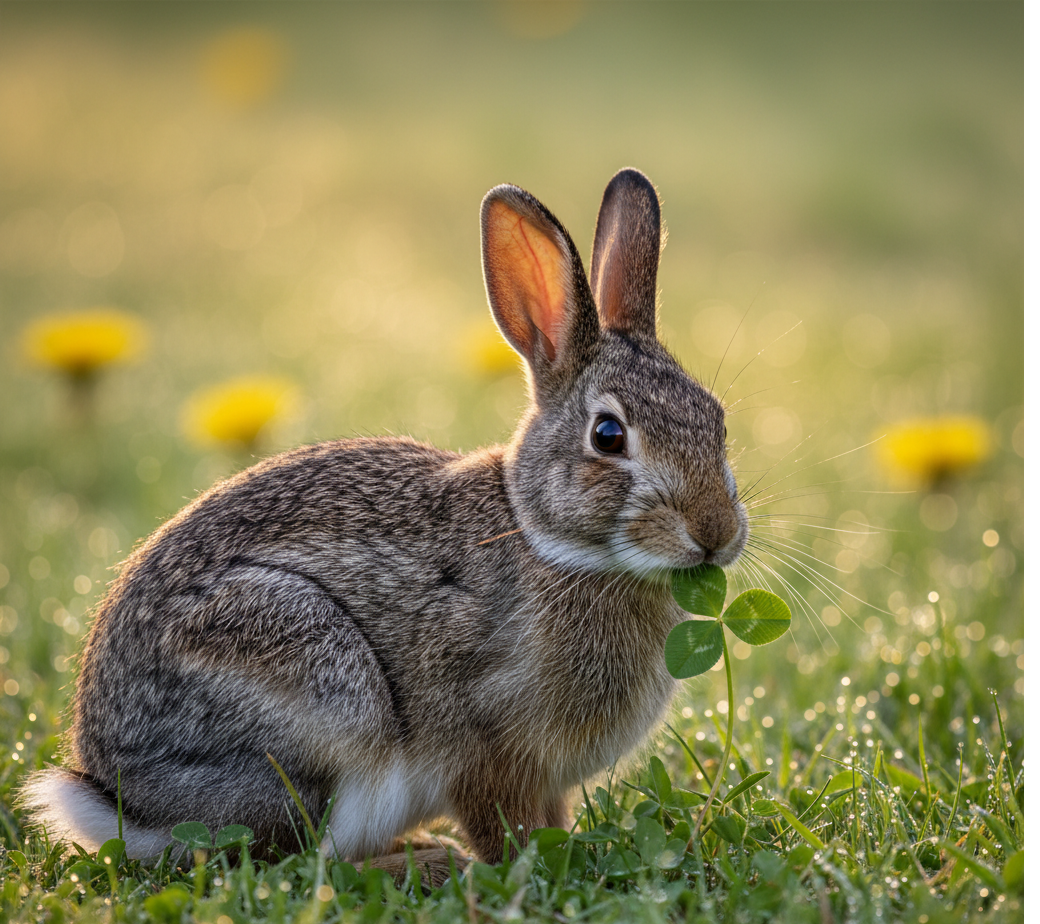
Introduction to the Eastern Cottontail (Sylvilagus floridanus)
Editor’s Note :This guide has been updated for the 2026 season to include new findings on urban rabbit habitats and revised safety protocols for handling orphaned kits. We have collaborated with wildlife experts to ensure all “Rescue & Care” information aligns with current veterinary standards for wild lagomorphs.
Quick answer: Eastern Cottontail rabbits are herbivores with a diet that shifts by season. Spring/Summer: They favor green, leafy vegetation like clover, dandelions, grasses, and garden vegetables (lettuce, peas, beans).
Winter: They switch to a “hard diet” of tree bark (maple, birch, oak), twigs, and woody stems.
Key Habit: They perform cecotrophy (eating nutrient rich droppings) to extract maximum vitamins from tough plant fibers.

Eastern Cottontail rabbits are one of the most common wild animals in North America. You have likely seen them in your yard or garden. They are small, brown, and have a white fluffy tail. Wildlife experts often call them “nature’s lawnmowers” because they eat so many plants every day. Knowing what they eat helps you protect your garden, care for baby rabbits, and understand their role in nature.
The Seasonal Menu: What Do They Eat Year-Round?

Cottontails do not eat the same food all year. Their diet changes with every season. They are very good at finding food no matter the weather. This is why they survive in so many places.
Spring and Summer: Fresh Greens, Clovers, and Garden Veggies

Spring is the best time for cottontails. Fresh plants grow everywhere and rabbits eat as much as they can. They love soft, tender plants that are full of water. These give them both food and hydration. Their favorite spring and summer foods include:
- Clover (red and white) and dandelions
- Kentucky bluegrass, crabgrass, and common yard weeds
- Garden vegetables like lettuce, spinach, kale, and beans
- Young carrot tops, pea shoots, and hostas
- Wild strawberry leaves and plantain weed
They feed most at dawn and dusk when it is cooler and safer for them.
| Pro Tip: Cottontails cut plant stems at a clean 45-degree angle, like scissors. This neat diagonal cut tells you a rabbit visited, not a deer. Deer tear and shred. Rabbits always leave a clean angled cut. |
Fall and Winter: Bark, Twigs, and Woody Stems

When winter comes and green plants disappear, cottontails switch to woody plant material. This is called the “hard diet.” It keeps them alive when nothing else is available.
Their main winter foods are:
- Bark from birch, maple, apple, and cherry trees
- Thin twigs and branches from sumac, rose, and wild shrubs
- Dried grasses and old seed heads still standing in fields
In winter, you may notice gnaw marks near the base of young trees. Wire mesh wraps can prevent this damage easily.
What Rabbits Should NOT Eat

The best thing you can do for a wild rabbit is leave it alone and let it eat its natural diet.
What Do Baby Cottontails Eat?

Finding a baby rabbit nest in your yard is very common. The nest is a small hole lined with dry grass and soft fur.
The mother only visits once or twice a day, just before dawn and after dusk. The nest is almost never truly abandoned.
Follow these simple steps to keep the nest safe:
- Do not pick up or handle the babies unless they are clearly hurt
- Place a loose string grid over the nest at night to check if the mother returns
- If the grid is moved by morning, the mother came back
- Keep all pets away from the area completely
By four weeks old, kittens are fully weaned and ready to survive on their own.
Feeding Orphaned Baby Rabbits
If the mother is truly gone, call a licensed wildlife rehabilitator right away.
For emergency feeding only:
- Use Kitten Milk Replacer (KMR) or diluted goat’s milk
- Never use cow’s milk. It causes fatal diarrhea in baby rabbits
- Feed with a small syringe, slowly, with the kitten held upright
- Under one week old: feed every 2 to 3 hours
- Over two weeks old: slowly introduce clover and dandelion leaves
| Warning: Never use cow’s milk, human baby formula, or sweetened milk. These cause severe diarrhea and can kill baby rabbits within hours. KMR from any pet store is your safest emergency option. |
Why Do Rabbits Eat Their Own Droppings?

Cottontails eat a special type of their own droppings. This is called cecotrophy, and it is completely normal and healthy.
Rabbits produce two types of droppings. The hard dry pellets you see are waste. The soft, dark cecotropes are full of nutrients.
Cecotropes are made in a part of the gut called the cecum. It works like a fermentation chamber full of good bacteria.
These bacteria produce vitamins, protein, and fatty acids that the rabbit absorbs when it eats the cecotrope a second time.
Without this “double digestion,” a rabbit could not survive winter on bark and twigs alone. This habit is key to their survival.
Signs of Cottontails in Your Yard

Scat and Tracks
Rabbit droppings are small, round, dry, and pea-sized. They are scattered loosely near feeding areas.
Deer droppings look like small dark almonds. Groundhog droppings are longer and found near burrow holes.
Rabbit tracks show four toes and a triangular hopping pattern in soft soil or snow.
Feeding Signs: The 45-Degree Cut
The clearest sign of a rabbit is the clean diagonal cut left on plant stems.
Deer tear and shred. Rabbits cut neatly. Once you know this, you can always tell which animal visited.
Also look for bark stripped near the base of trees, short-cropped grass circles, and small round droppings nearby.
How to Protect Your Garden Without Harm

Cottontails are native animals. You do not need to hurt them to protect your garden.
Simple, non-harmful methods work very well.
Fencing
Use chicken wire or hardware cloth with holes no larger than one inch.
Make it two feet tall and bury the bottom six inches underground, bent outward to stop digging. This blocks almost all rabbit access.
Repellents
Spray repellents with hot pepper or rotten egg solids make plants taste bad to rabbits.
Reapply after rain and when new growth appears.
Habitat Changes
Rabbits avoid open spaces where they feel exposed. Remove brush piles and dense shrubs near your garden.
Planting lavender, marigolds, sage, or rosemary as a border also helps. Rabbits dislike the strong smell.
Frequently Asked Questions
Do Cottontails Drink Water?
Yes, but they get most of their water from the fresh plants they eat. In dry or hot weather, they look for birdbaths or garden ponds.
Do They Eat Carrots?
Yes. They prefer the leafy green tops over the root. Carrots are not a natural food for them, but small amounts will not cause harm.
Are They Nocturnal?
No. They are most active at dawn and dusk. During the middle of the day and at night, they rest in a shallow spot under a shrub or in tall grass.
How Much Do They Eat Per Day?
An adult cottontail eats one to two pounds of plant material per day in spring and summer. In winter, they eat much less to save energy.
Do They Store Food for Winter?
No. Unlike squirrels, cottontails find and eat food in real time every day. They rely on their ability to eat bark and twigs when nothing else is available.
Conclusion and Ecological Role

Eastern Cottontail rabbits are much more than a garden pest. They are a key part of the local food chain.
Hawks, owls, foxes, and coyotes all depend on them as a primary food source.
Their eating habits also shape the plants around them and return nutrients to the soil through their droppings.
Learning what they eat helps you protect your garden, help baby rabbits, and see these small animals in a new way.
The next time you spot a cottontail nibbling a dandelion at dawn, you are watching one of nature’s best survivors doing its job.
Quick Reference: Eastern Cottontail Diet at a Glance
| Season | Primary Foods | Key Behavior |
| Spring | Clover, dandelion, Kentucky bluegrass | Feeds heavily; builds body weight |
| Summer | Garden veggies, crabgrass, plantain | Most active at dawn and dusk |
| Fall | Drying grasses, seed heads | Eats more cecotropes for nutrients |
| Winter | Bark, twigs, sumac, rose stems | Survives on double digestion |
Updates Section: 2026 Revision
- Climate Alert: Due to rising summer temperatures, we have added a section on providing safe “Hydration Stations” for urban rabbits.
- Safe Repellents: Updated the garden protection section with 2026-approved organic, pollinator-friendly scents that deter rabbits without harming bees.
- Health Protocol: New details on identifying RHDV2 (Rabbit Hemorrhagic Disease Virus) symptoms to help readers report sick wildlife to local authorities.
- Dietary Refinement: Clarified the distinction between “safe” wild greens and store-bought vegetables that may contain high pesticide residues.
Author Note:
About the Author: ZIB ZIB is a wildlife researcher and conservationist dedicated to bridging the gap between urban development and natural habitats. With over a decade of field experience studying North American mammals, ZIB focuses on practical, humane solutions for coexisting with local wildlife. “Understanding what happens in your backyard is the first step toward global conservation.