
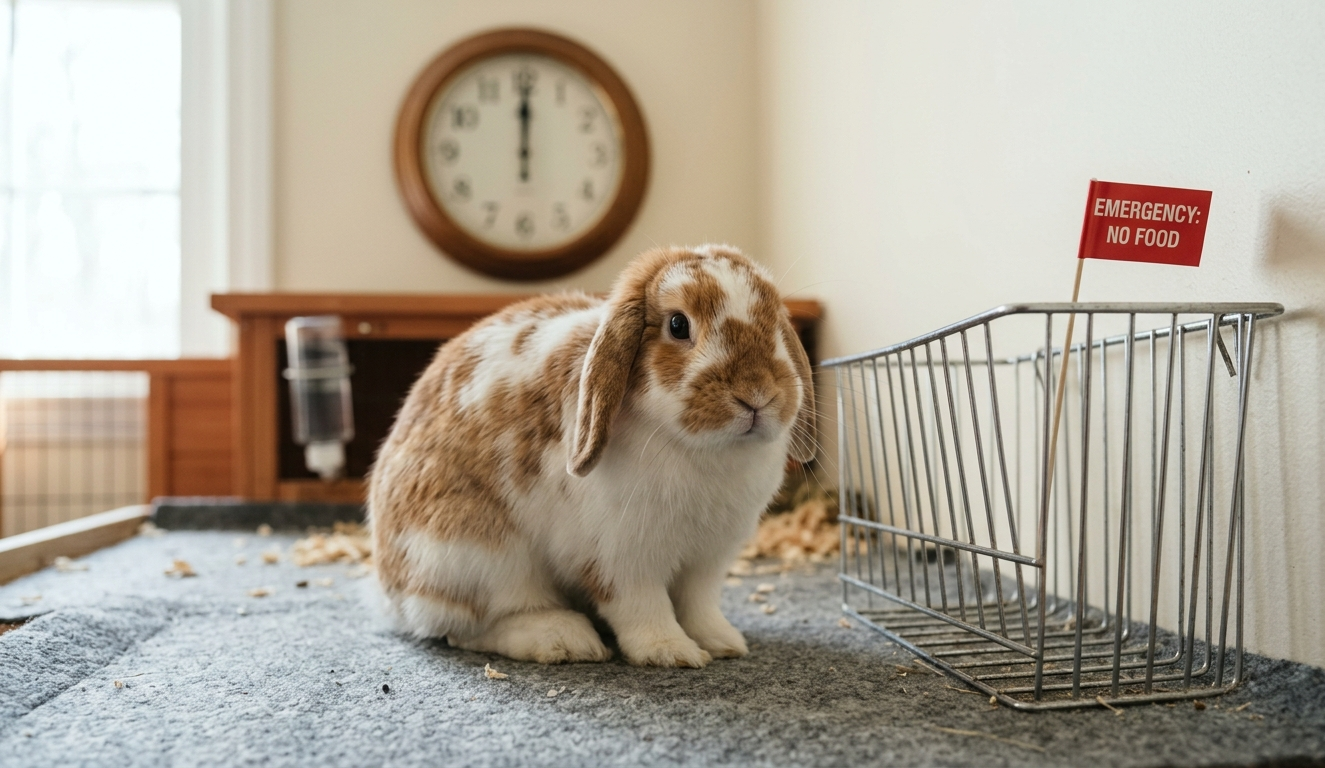
Quick Answer: A rabbit should not go without food for more than 6 to 12 hours. After 12 hours, the digestive system begins to shut down, a condition called GI stasis. After 24 hours without food, the situation becomes life-threatening. If your rabbit has stopped eating, treat it as a medical emergency and contact a vet right away.
Rabbits are not like dogs or cats. Their digestive system must keep moving at all times to stay healthy. A rabbit that skips even one meal can be in serious trouble. Unlike other pets, rabbits cannot vomit. When food stops moving through their gut, gas builds up quickly and the entire system can shut down. This guide walks you through exactly what happens hour by hour, what symptoms to watch for, and what to do before you can get to a vet.
The 24-Hour Countdown: What Happens to a Rabbit’s Body?
Every hour matters when a rabbit stops eating. Here is a clear timeline of what is happening inside your rabbit’s body.
0 to 6 Hours

First Signs of Discomfort
Your rabbit may seem less active than usual, sit in a hunched position, or show less interest in food. Gut sounds may slow down. This is the best window to act.
6 to 12 Hours
GI Stasis Begins

The digestive system is significantly slowing down. Gas starts building up. Your rabbit may stop producing droppings, grind its teeth, or press its belly to the floor.
12 to 24 Hours

The Danger Zone
This is a medical emergency. Without food, the liver begins pulling fat reserves, risking hepatic lipidosis. Body temperature may drop. Immediate vet care is critical. Gut motility is the key term here. It refers to the muscle movement that pushes food through the digestive tract. In rabbits, this movement must never stop. Even a short pause can trigger a cascade of problems that escalates very quickly.
Why “Not Eating” Is a Medical Emergency
Most pet owners think skipping a meal is a minor issue. For rabbits, it is not. A rabbit’s digestive tract is designed to run continuously. The gut needs a steady flow of fiber, mainly from Timothy hay, to keep moving. When that flow stops, harmful bacteria multiply rapidly inside the gut. This produces painful gas that your rabbit cannot release. The less it eats, the worse the stasis gets. This cycle can become fatal within 24 to 48 hours if left untreated. Dogs and cats can handle a missed meal fairly well. Rabbits simply cannot. This is the fundamental difference that every rabbit owner must understand.
Red Flags: Symptoms You Cannot Ignore
The Hunched Posture and Teeth Grinding

A rabbit in pain will often sit hunched up with its belly tucked in. It may press its stomach against the floor trying to relieve pressure. Teeth grinding, known as bruxism, is another clear signal. A soft tooth purr means contentment. Loud, grating tooth grinding means pain. Learn the difference.
The Poop Check: Your Most Reliable Tool

Checking your rabbit’s droppings is one of the most important things you can do as a rabbit owner. Normal droppings are round, uniform, and medium brown. Any change is a warning sign.
| What You See | What It Means | Action |
| Round, uniform, medium brown | Healthy gut, good motility | Keep up the good diet |
| Small, dry, or pea-sized | Gut is slowing down, dehydration likely | Increase hay and water, monitor closely |
| Stringy or clumped together | Too many cecotropes, diet imbalance | Reduce pellets, increase hay immediately |
| No droppings at all | Severe GI stasis in progress | Emergency vet visit required now |
| Liquid or very soft | Infection or serious dietary issue | Vet visit urgently needed |
The Cold Ear Test for Hypothermia
Gently feel your rabbit’s ears. Healthy ears are warm or slightly cool at the tips. If your rabbit’s ears feel cold all over, especially toward the base, its body temperature may be dropping. A healthy rabbit’s body temperature should be between 101°F and 103°F (38.3°C to 39.4°C). Cold ears, combined with no eating, is a serious emergency sign. A rabbit that refuses to move, hides in a corner, or shows no reaction to sounds it normally responds to is telling you something is very wrong.
Common Reasons Why Rabbits Stop Eating
Dental Disease: Spurs and Overgrowth

Rabbit teeth grow continuously throughout their life. Without enough hay to wear them down, teeth can develop sharp points called spurs. These spurs cut into the tongue and cheeks, making eating extremely painful. A rabbit with dental problems may approach its food bowl and then back away. This is a clear sign of mouth pain. Only a vet can identify and treat dental spurs.
Stress and Environmental Triggers

Rabbits are sensitive animals. Loud noises such as fireworks, thunderstorms, or heavy traffic can cause significant stress. Moving to a new home is also a major trigger. In the United States, the 4th of July is one of the most common times for rabbit owners to report sudden appetite loss. If you live in a noisy urban area, environmental stress should always be on your checklist.
Improper Diet and Lack of Timothy Hay

Timothy hay should make up at least 80% of an adult rabbit’s diet. Many owners unknowingly overfeed pellets or treats, which fill the rabbit up without providing the fiber needed to keep the gut moving. A rabbit that eats treats but refuses hay is a rabbit heading toward digestive trouble. Hay is not optional. It is the single most important part of a rabbit’s daily diet.
Emergency First Aid: What to Do While Waiting for the Vet
Important Notice
The steps below are designed to buy time while you arrange veterinary care. They are not a substitute for professional treatment. GI stasis is a medical emergency and home care alone is not enough.
Keep Your Rabbit Moving

Movement stimulates gut motility. Gently encourage your rabbit to walk around a safe, enclosed area. Even short bursts of movement can help get the digestive system working again. Do not force the rabbit to move if it is in obvious pain or extremely weak. In that case, keep it warm and calm while you arrange emergency transport.
Syringe Feeding Water for Hydration

Dehydration makes GI stasis significantly worse. If your rabbit is not drinking, you can use a small oral syringe (without the needle) to gently offer water. Place the syringe at the side of the rabbit’s mouth, not directly into the throat. Offer tiny amounts at a time. Do not force large amounts quickly as this can cause choking.
Baby Gas Drops: Simethicone

Simethicone, sold in the United States under brand names like Infants’ Mylicon, is a common home remedy used by many rabbit owners to relieve painful gas. A typical dose is 1 ml given orally every hour for up to three doses. Simethicone is not absorbed into the body and works only in the gut to break up gas bubbles. It is widely considered safe for rabbits, but always confirm dosing with your vet.
Gentle Tummy Massages
With clean, warm hands, gently massage your rabbit’s belly in small circular motions. This can help break up gas pockets and encourage gut movement. Use only very light pressure. If your rabbit cries out, tenses up, or tries to escape, stop immediately. Pain during a tummy massage indicates a more serious condition that requires vet attention right away.
What to Expect at the Veterinary Clinic

When you arrive at an exotic animal vet, the team will start by assessing your rabbit’s gut sounds using a stethoscope. A healthy gut is surprisingly loud. Silence is a warning sign.
The vet may recommend the following:
- Subcutaneous or IV fluids to rehydrate your rabbit quickly
- Pain medication to reduce discomfort and encourage eating
- Motility drugs such as metoclopramide or cisapride to restart the gut
- Syringe feeding with a critical care formula such as Oxbow Critical Care
- X-rays to rule out a blockage or other serious issue
The earlier you bring your rabbit in, the better the outcome. Rabbits treated in the first few hours of stasis recover far more quickly than those who are brought in after 24 hours.
Prevention: How to Keep the Gut Moving Every Day

Prevention is far easier than treatment. A few simple daily habits can keep GI stasis from ever becoming a problem.
- Make fresh Timothy hay available around the clock. Never let the hay rack go empty.
- Keep fresh water available at all times. Many rabbits prefer a ceramic bowl over a water bottle.
- Limit pellets to a small amount daily based on your rabbit’s weight. Ask your vet for the right portion size.
- Provide at least 3 to 4 hours of exercise and exploration time outside the cage every day.
- Schedule annual dental checkups with an exotic animal vet.
- Reduce stress by keeping loud noises minimal, especially during fireworks season.
- Brush your rabbit regularly during shedding season to reduce the amount of fur swallowed.
A rabbit that eats well, moves often, and lives in a calm environment rarely develops digestive issues. Small daily attention adds up to years of good health.
Frequently Asked Questions
Can a rabbit die from not eating for 24 hours?
Yes, it is possible. After 24 hours without food, a rabbit’s liver begins to process fat reserves, which can lead to hepatic lipidosis. The gut also continues to deteriorate from GI stasis. While not every rabbit will die within 24 hours, the risk of permanent organ damage or death increases significantly after this point. Always treat it as an emergency before the 12-hour mark.
Why is my rabbit eating treats but refusing hay?
Treats are high in sugar and are far more palatable than hay. When a rabbit fills up on treats, it has no appetite for hay. However, it is also possible that dental pain is making chewing hay uncomfortable, since treats are softer and easier to eat. Reduce or eliminate treats completely and have a vet check the teeth to rule out a dental problem.
How can I stimulate my rabbit’s appetite at home?
Offer fresh leafy greens such as romaine lettuce, cilantro, or flat-leaf parsley. These have a strong smell that often encourages a reluctant rabbit to eat. You can also try a small amount of fresh pineapple juice, which contains bromelain and may help move things along. Gentle exercise and a calm, quiet environment also help restore appetite naturally.
What is the first thing I should do if my rabbit stops eating?
Check the litter box for droppings. If you find none, or if the droppings are very small and dry, contact an exotic animal vet right away. While you wait, encourage movement, offer water, and make sure fresh hay is available. Do not wait to see if the rabbit improves on its own. Time is critical with GI stasis.
Is GI stasis the same as a blockage?
No, they are different. GI stasis is a slowdown or complete stop of gut movement, usually caused by improper diet, stress, or dehydration. A true blockage means something physical is obstructing the digestive tract, often a hairball or foreign object. Both require vet care, but a blockage is typically more serious and may need surgery. An X-ray at the clinic can tell the difference.
Build Your Rabbit First Aid Kit Today
Every rabbit owner should keep a basic first aid kit at home. You hope you never need it, but having it ready can make a real difference in an emergency.
Your kit should include infant simethicone drops, an oral syringe, a digital rectal thermometer, a bag of Oxbow Critical Care powder, and the phone number of your nearest exotic animal emergency clinic.
Knowing the signs of GI stasis, keeping that kit stocked, and acting quickly at the first warning sign gives your rabbit the best possible chance of a full recovery.
Your rabbit depends entirely on you to notice when something is wrong. A few minutes of daily observation is the most valuable thing you can give them.