Medical Disclaimer: This article is for informational purposes only and does not replace professional veterinary advice. If your rabbit shows signs of dehydration or illness, contact a rabbit-savvy vet immediately.
Quick Answer
Rabbits should never go more than 12 hours without water. Beyond 24 hours, the risk of organ failure becomes very high. Even a few hours without water in hot weather can become a life-threatening emergency.
| Timeframe | Risk Level |
| 0 to 8 Hours | Low (normal thirst) |
| 8 to 12 Hours | Moderate (danger zone begins) |
| 12 to 24 Hours | High (GI Stasis risk) |
| 24+ Hours | Critical (kidney failure possible) |
Why Water Is So Critical for Rabbits

Rabbits are hindgut fermenters. This means their digestive system depends on constant movement of food and fluid through a very long intestinal tract. When water intake drops, the gut slows down. When the gut slows down, dangerous gases build up. This leads to a condition called GI Stasis, which can be fatal within 24 to 48 hours if left untreated. Water also supports kidney function. Unlike dogs or cats, rabbits have very sensitive kidneys that cannot tolerate even mild dehydration for long periods. This is why water is not just comfort for a rabbit. It is a survival requirement.
The Hour-by-Hour Survival Timeline

1 to 8 Hours: Mild Thirst
During this window, your rabbit may seem completely normal. They will still eat, groom, and move around. However, their body has already started conserving water internally. You may not notice anything unusual at this stage
8 to 12 Hours: The Danger Zone
This is where things start to shift. Your rabbit may become quieter than usual. Appetite begins to drop. They may show less interest in hay or pellets. Droppings may start to look smaller or dryer than normal.
This is the point to act, not wait.
12 to 24 Hours: GI Stasis Risk
At this stage, the digestive system begins to slow down noticeably. GI Stasis occurs when the gut stops moving properly. Gas builds up inside the intestines, causing pain and bloating. Your rabbit may sit hunched, grind their teeth, or refuse to move. This is a medical emergency. Do not wait until morning to call a vet.
24 Hours and Beyond: Organ Damage Risk
Beyond 24 hours without water, kidney failure becomes a real possibility. The kidneys can suffer permanent damage even if the rabbit survives. GI Stasis at this stage is extremely difficult to reverse without veterinary intervention including IV fluids, pain relief, and gut motility medication.
If your rabbit has not had water in 24 hours, go to an emergency vet now.
Factors That Shorten the Safe Window

High Temperatures
At 80 degrees Fahrenheit (26 degrees Celsius) or above, rabbits dehydrate much faster than in cooler conditions. They release heat through their ears, and this process uses body moisture rapidly. A rabbit in a warm room or outdoor hutch in summer can enter the danger zone in as little as 4 to 6 hours without water.
A Pellet-Heavy Diet
Pellets are dry food. A rabbit eating mostly pellets needs significantly more water than one eating fresh hay and leafy greens.Fresh hay contains some natural moisture. Pellets contain almost none. If your rabbit is on a pellet-heavy diet, even a brief gap in water access is more dangerous.
Nursing Mothers
A lactating doe (female rabbit) produces milk continuously. This process requires a very high water intake. A nursing mother rabbit cannot safely go even 8 to 10 hours without water. Her kits are also at indirect risk if her milk supply drops due to dehydration.
Baby Rabbits
Young rabbits under 8 weeks old are far more vulnerable to dehydration than adult rabbits.
Their small bodies have less fluid reserve and their organs are still developing. A baby rabbit can deteriorate within just a few hours without adequate hydration.
Water Needs by Breed Size
| Breed | Size | Daily Water Intake |
| Netherland Dwarf | Small (2 to 2.5 lbs) | 1.5 to 2 oz per pound of body weight |
| Large (15+ lbs) | 1.5 to 2 oz per pound of body weight | |
| Flemish Giant | Large (15+ lbs) | 1.5 to 2 oz per pound of body weight |
Note: All rabbits follow the same general guideline of 1.5 to 2 oz of water per pound of body weight daily. A Flemish Giant therefore needs up to 30 oz (nearly a quart) of water every single day.
How to Check for Dehydration at Home

The Skin Turgor Test (Skin Pinch Test)
This is the most reliable at-home test for dehydration.
Step 1: Gently pinch a small fold of skin on the back of your rabbit’s neck between your thumb and index finger.
Step 2: Pull it up slightly and release.
Step 3: Watch how quickly the skin returns to its normal position.
In a dehydrated rabbit, the skin will stay tented or return slowly. This is a clear sign that your rabbit needs fluid support right away.
Physical Signs to Watch For
- Sunken or dull-looking eyes
- Sticky or tacky gums instead of moist and pink
- Dry or flaky skin around the nose and ears
- Loose, wrinkled skin
Behavioral Red Flags
- Refusing favorite treats or leafy greens
- Sitting hunched in a corner
- Grinding teeth (a sign of pain)
- Not producing normal round droppings
- Producing very small, dry, or misshapen pellets
If you see any of these signs, do not wait. Contact your vet.
The Equipment Problem: Bottles vs. Bowls

Why Water Bottles Often Fail
Many rabbit owners use the classic drip-style water bottle with a metal ball valve. These bottles are inexpensive and popular. However, they are also one of the most common causes of accidental dehydration. The ball valve can get stuck. The bottle can develop an air lock. Your rabbit may press the valve and get no water at all. This can go unnoticed for hours or even a full day. Your rabbit may appear to “use” the bottle but actually receive no water.
Why Water Bowls Are Superior
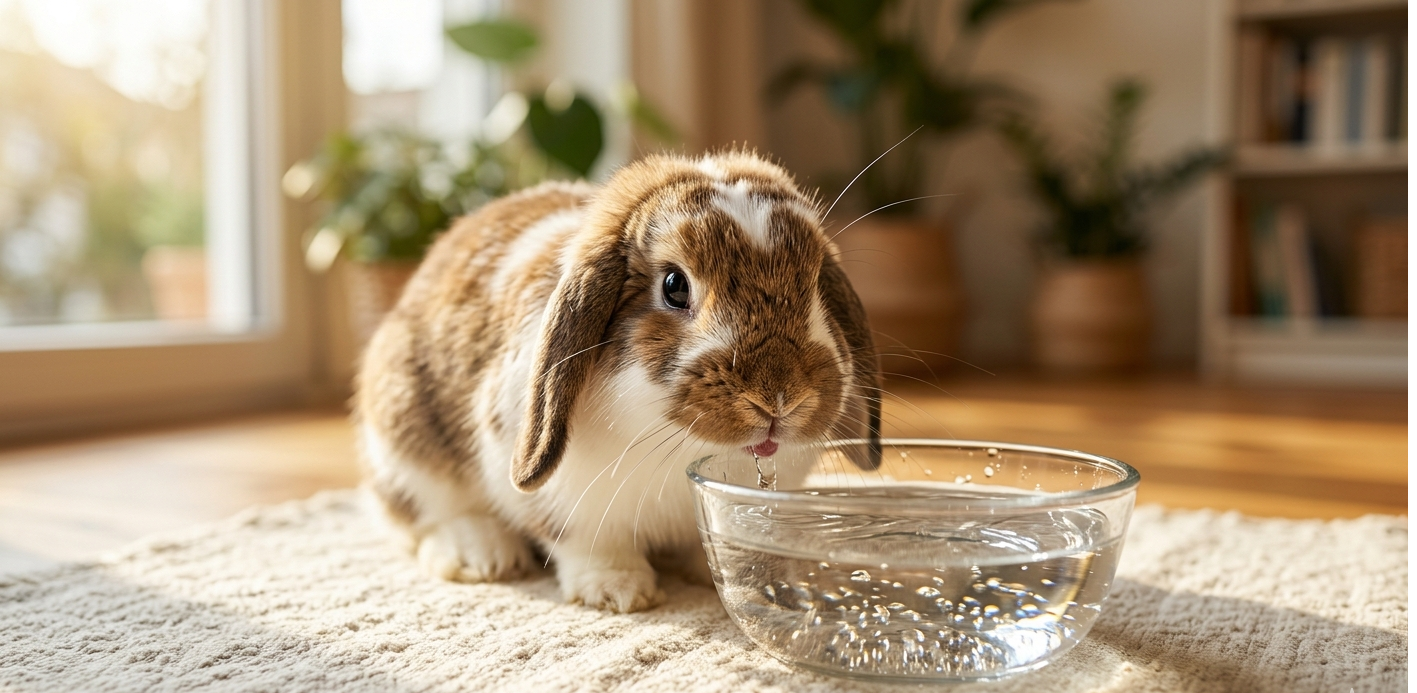
Studies on rabbit behavior and anatomy show that rabbits drink more water from a bowl than from a bottle. The natural drinking posture for a rabbit involves lowering the head to a water source. A bottle requires them to tilt their head up and work against gravity to trigger the valve. This is unnatural and uncomfortable. A heavy ceramic or stainless steel bowl placed flat on the ground is safer, more natural, and easier to monitor. You can see at a glance how much your rabbit has drunk.
Recommendation: Use a wide, heavy bowl that cannot easily tip. Refresh the water at least twice daily.
Emergency Steps If Your Rabbit Won’t Drink

Step 1: Offer Fresh Water in a Bowl
If your rabbit normally uses a bottle, switch to a bowl immediately. Sometimes rabbits refuse to drink simply because they cannot access the water properly.
Step 2: Offer Washed Leafy Greens
Romaine lettuce, cilantro, and parsley have a high water content. Do not dry them fully after washing. The extra moisture on the leaves gives your rabbit some fluid intake while you work on getting them to drink normally.
Step 3: Syringe Feeding (With Caution)
A small syringe (without a needle) can be used to gently offer water to a reluctant rabbit. Tilt the syringe toward the side of the mouth, not straight back. Give only a tiny amount at a time and wait for the rabbit to swallow naturally. Never force water into a rabbit’s mouth as this can cause aspiration.
Step 4: Electrolyte Support
Plain Pedialyte (unflavored) can be diluted 50/50 with water and offered to a mildly dehydrated rabbit.Do not use sports drinks or flavored electrolyte products. Always confirm with your vet before using any electrolyte solution.
Step 5: Get Veterinary Help
If your rabbit has not had water in over 12 hours, is showing signs of GI Stasis, or is unresponsive to home efforts, you need professional care. A vet can administer subcutaneous or IV fluids far more effectively than any home remedy.
Frequently Asked Questions
How long can a rabbit be left alone over a weekend?
Over a weekend, a trusted person must check on them at least once every 12 hours. Water supply, food, and general health should all be checked at each visit. An automatic water bowl with a reservoir can provide some backup security.
Can a rabbit die from not drinking for one day?
Yes. A rabbit that goes 24 hours without water is at serious risk of kidney damage and GI Stasis. Some rabbits may survive beyond 24 hours depending on age, diet, and temperature. But this should never be used as a reason to delay action.
What does dehydration poop look like in rabbits?
Dehydrated rabbit droppings are smaller, darker, and harder than normal. They may also be misshapen or clustered together. In severe dehydration, you may see very few droppings at all, which is a sign that the gut is slowing down.
Final Safety Checklist
Before leaving your rabbit for any extended period, confirm the following:
- Fresh water is available in a clean bowl or a functioning bottle
- A trusted person will check on your rabbit within every 12 hours
- Room temperature is below 75 degrees Fahrenheit
- Your rabbit is eating hay and producing normal droppings
- You have the contact number of a rabbit-savvy emergency vet saved
When to Call the Vet Immediately
Call a vet right away if your rabbit:
- Has not drunk water in 12 or more hours
- Is not producing droppings
- Appears hunched, in pain, or unusually still
- Has sunken eyes or tacky gums
- Is grinding teeth or pressing their belly to the ground
GI Stasis and dehydration are both time-sensitive emergencies. Acting quickly gives your rabbit the best chance of a full recovery. Your rabbit cannot tell you they are thirsty. You are their only voice. When in doubt, call your vet.